Japan's Hayabusa2 Lost Its Last Good Engine, So Now It's Going to Shoot Past a Tiny Asteroid Instead
JAXA dropped Hayabusa2's planned 2031 visit to asteroid 1998 KY26 after the probe's last working ion engine broke down in August. It will now fly past 2015 BM510, a dark rock 17 to 74 meters wide, in April 2028 at about 6 km per second.
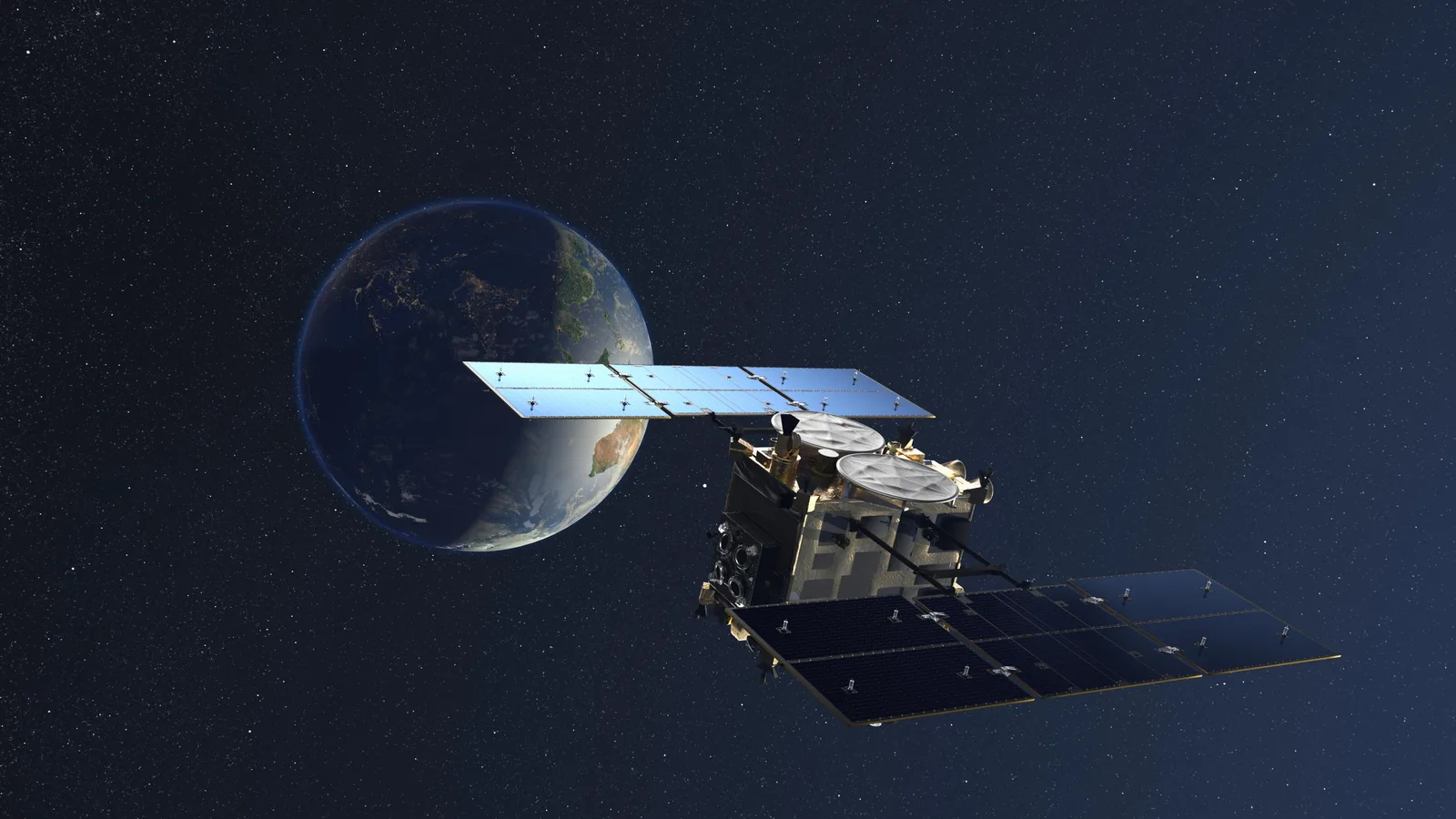
So basically: Japan’s Hayabusa2, the probe that brought home pieces of an asteroid in 2020, was supposed to meet a tiny asteroid called 1998 KY26 in 2031 and try to land on it. That’s off. Its last working ion engine broke down in August, so it can’t make the trip anymore. Instead, it’s going to blast past a different little asteroid, 2015 BM510, in April 2028 at about 6 kilometers per second. No stopping, no landing. One shot.
What broke
Hayabusa2 has four ion engines, labeled A through D. Ion engines are super efficient. They push out charged particles of xenon gas, which gives a tiny but steady push that adds up over months and years.
By this summer, engines A, C and D had already worn down, so engine B was doing all the work alone. Engineers even fed it extra xenon to keep it going. By June 9, it had logged 8,143 hours of running. Then in mid-August, it broke down too. Japanese news reports say parts inside it shorted out.
The team has a workaround that mixes parts from two different engines, a trick the first Hayabusa also used back in 2009. It works, but it doesn’t make enough thrust. That means Hayabusa2 can’t make the December 2027 swing past Earth it needed to reach KY26.
”The deterioration of the onboard equipment … is becoming increasingly evident,” mission team leader Yuya Mimasu told reporters, according to AFP. The probe launched in December 2014, so it’s been flying for 12 years.
Meet the new target
2015 BM510 is small. JAXA says it’s somewhere between 17 and 74 meters across, and it spins once every 49 minutes. It’s also dark, and scientists think it’s a D-type asteroid. That type is believed to be rich in organic material and more like a comet, possibly coming from the outer solar system. It’s interesting enough that it was already the main pick in a proposal for a future European Space Agency mission.
Here’s the hard part. A dark rock that small is tough to even see. The team expects to spot it only about 10 hours before the closest pass, which leaves almost no time to fine tune the aim. Mimasu called it “one of the world’s most difficult flyby missions.”
Hayabusa2 has done this before
They do have recent practice. On July 5, Hayabusa2 flew past an asteroid called Torifune at about 5.3 km per second. JAXA later worked out it passed only about 400 meters from the surface. That’s the closest flyby ever of a solar system body. Torifune turned out to be a peanut shaped asteroid about 540 meters wide.
And that came after its main job. Hayabusa2 landed on asteroid Ryugu, collected samples and dropped them back to Earth in a capsule in December 2020. The goal was 0.1 grams. It brought back about 5.4 grams.
Why a flyby still matters
Small, dark asteroids are exactly the kind that are hardest to find before they get close to Earth. Learning how to find one and hit a precise flyby at high speed is useful practice for planetary defense, and Mimasu said as much. Around the same time in 2028, JAXA is also set to launch its next asteroid mission, Destiny+.
My take
It stinks to lose the landing. A slow visit to KY26 would’ve taught us way more than a quick pass ever will. But I can’t be mad at a 12 year old spacecraft with worn out engines. Hayabusa2 already did its main job and then some. Most missions would just get switched off at this point. Instead, JAXA is taking a probe running on a patched up engine and lining up a 6 km per second pass at a rock it won’t even see until the last 10 hours. If they pull that off, it’s one more win for a probe that keeps doing more than anyone asked it to.
So basically — pass it on.
Daily Updates
Get new stories in your inbox
Near-future tech when it moves. Robots, space, EVs, AI. No spam.