Google's AI Chip Satellite Is Working, and the First Thing It Did Was Write a Haiku
Google's first Project Suncatcher satellite, which launched on SpaceX's Transporter-18 in October 2026, is online after about three weeks of checkout. Its first prompt asked the Gemma 4 model onboard for a haiku about space. Two more satellites are planned for 2027.
So basically: Google has a satellite in orbit with its own AI chips on board, and it’s officially working. When engineers sent it the very first prompt, they asked the AI to write a haiku about being in space.
Here’s what it wrote back, according to TechCrunch:
Blue marble below Data streams in silent grace Starlight feeds my core.
Not bad for a computer floating in orbit.
What this satellite is
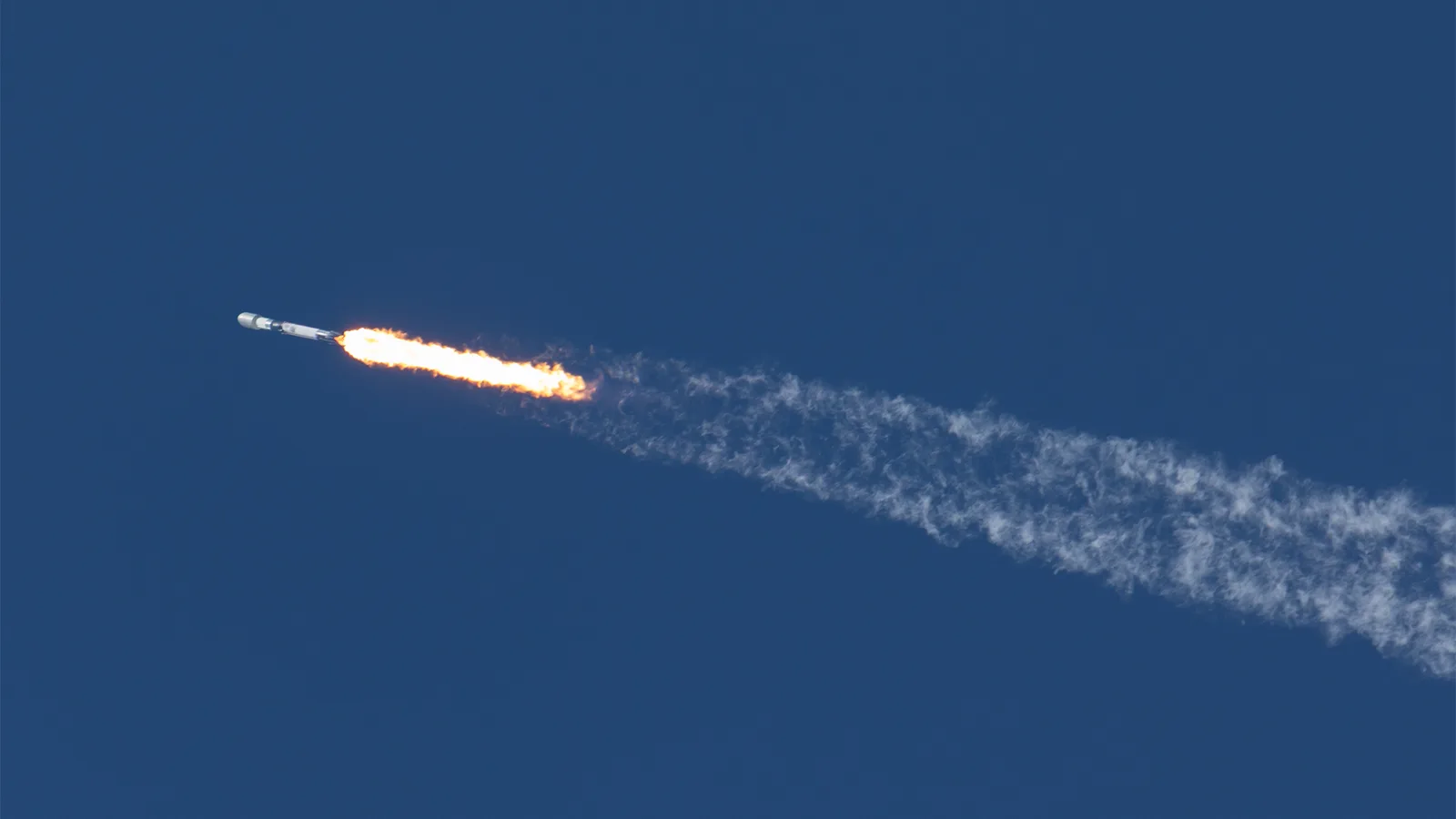
This is the first test satellite for Project Suncatcher, Google’s long shot plan to build data centers in space. I wrote about it before it launched. It rode up on SpaceX’s Transporter-18 rideshare on a Falcon 9 in early October, along with more than 100 other spacecraft.
The satellite carries:
- Four of Google’s Tensor Processing Units, or TPUs, the chips Google designs to run AI
- Enough power to make up to 1 kilowatt of electricity
- Gemma 4, a Google DeepMind AI model, loaded onboard
There’s a catch. The TPUs use so much power that the satellite can only run one at a time, and only for about 20 minutes before it has to stop. That makes things tricky, because it also has to talk to the ground during short windows when it passes overhead.
After launch, Google spent about three weeks testing every system on the satellite. Once that was done, the haiku prompt went up this week. Google also asked the satellite to report on the conditions around it in orbit. A Google spokesperson told TechCrunch the satellite is operating normally.
What they’re actually testing
The poem is the fun part. The real test is whether these chips can survive space.
Two things can mess up a computer in orbit:
- Heat and cold. There’s no air to carry heat away, so chips can cook or freeze.
- Radiation. Space radiation can cause bit flips, where a stored 1 turns into a 0 or the other way around. That can quietly corrupt data without setting off normal error checks.
Google already blasted its TPUs in particle accelerators here on Earth. Those tests suggested radiation would barely bother inference, which is using an AI that’s already trained. It looked like a bigger problem for training a model. Now they get to see what happens for real.
What’s next
If these chips hold up, Google plans to launch two more Suncatcher satellites in 2027. Those will make more power and test laser links between satellites, so they can share work like one big computer.
That’s what makes Google’s plan different. TechCrunch notes that companies like Starcloud and Cowboy Space plan to run AI on single satellites. SpaceX’s orbital data centers are expected to use laser links too, but to fly too far apart to share processing well. Google wants a tight group of satellites flying close together and working as a team.
The Starship problem
To ever do this at real scale, Google needs launches to get way cheaper. That basically means Starship, SpaceX’s giant reusable rocket.
Suncatcher researchers published a peer reviewed analysis this month estimating SpaceX would need to fly Starship about 1,800 times to get the same kind of cost drop it got with its earlier rockets. Google’s goal is space data centers that make financial sense in the 2030s.
And there’s a family tie here. Alphabet, Google’s parent company, owns a big stake in SpaceX.
My take
I’ll admit the haiku got me. But the part that matters is that four AI chips are sitting in orbit and working after three weeks of checks. The one at a time, 20 minute limit shows how far this still is from a real data center. It’s a lab in space, not a server farm. If the 2027 satellites can link up and work together, that’s when I’ll start taking space data centers seriously. Until then, it’s a really cool poem.
So basically — pass it on.
Daily Updates
Get new stories in your inbox
Near-future tech when it moves. Robots, space, EVs, AI. No spam.