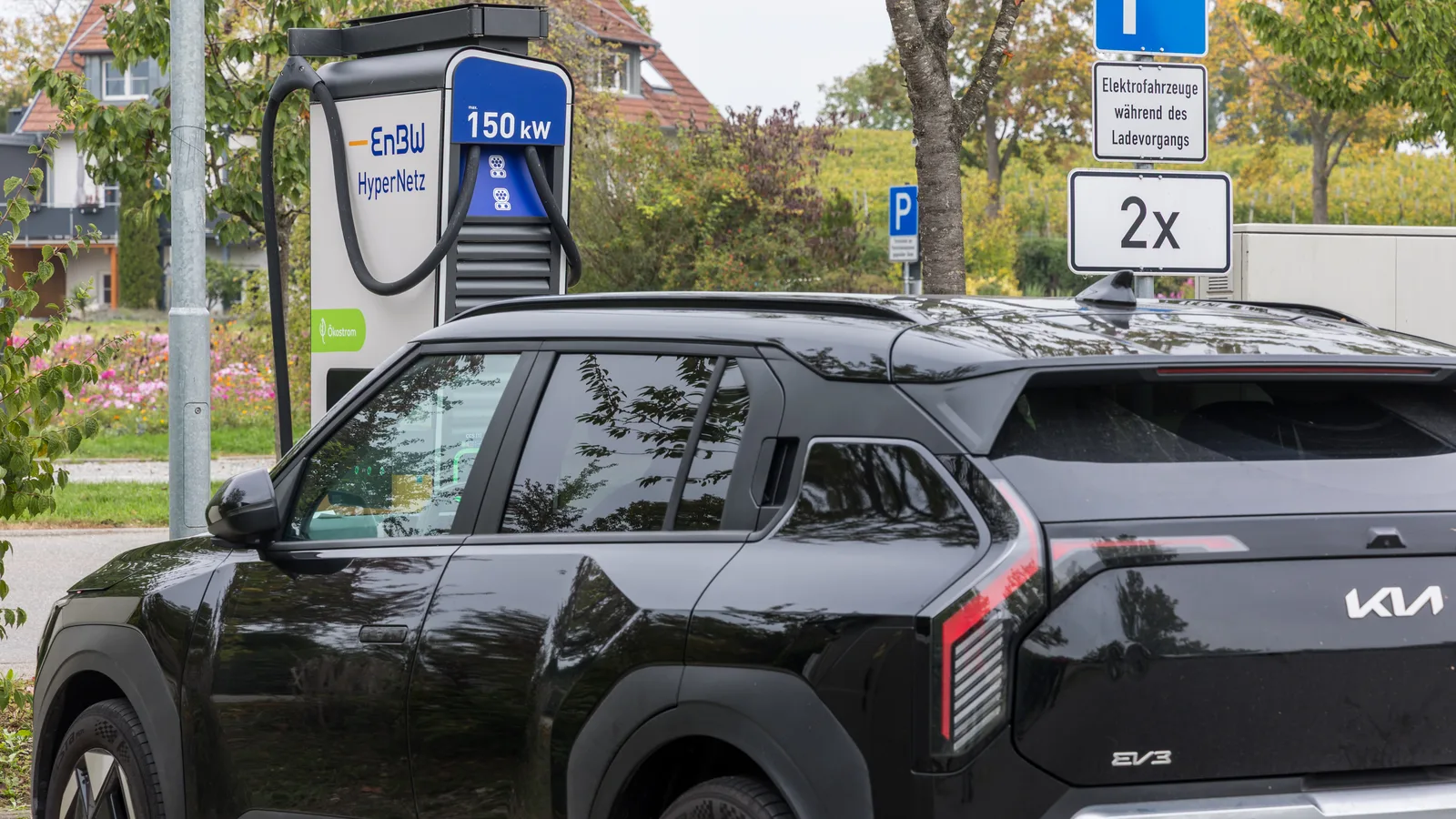
Germany Just Registered More Electric Cars Than Gas and Diesel Cars Combined, Again. EVs Hit 37 Percent
Germany's motor vehicle authority (KBA) says 94,086 new battery electric cars were registered in October 2026, a record 37 percent of the market. That's more than gasoline (38,516) and diesel (23,882) put together, for the second month in a row.
So basically: In Germany, the country that basically invented the modern car and the diesel engine, more than 1 out of every 3 new cars registered in October was fully electric. That’s 37 percent, a new record. And for the second month in a row, Germans registered more electric cars than gasoline and diesel cars added together.
The numbers come from the KBA, Germany’s federal motor vehicle authority, which released them on Nov. 4, 2026.
The October numbers
Here’s how October broke down:
- 94,086 battery electric cars, about 37 percent of the market
- 38,516 gasoline cars, about 15 percent
- 23,882 diesel cars, about 9 percent
- 28,499 plug in hybrids, about 11 percent
- 67,432 regular and mild hybrids, about 26.5 percent
Gas plus diesel comes out to about 62,400 cars. Electric beat that by more than 31,000.
How fast this happened
A year ago, in October 2025, Germany registered 52,425 electric cars. So October 2026 was up about 79 percent.
The share has been climbing month after month. Per Electrek, electric cars became Germany’s most popular type of car for the first time in June at about 28 percent. Then it went to about 32 percent in August, 34.5 percent in September, and now 37 percent. A year ago, electrive.net says, it was around 22 percent.
Meanwhile, the old stuff is falling hard. Gasoline car registrations dropped 40.5 percent compared to last October. Diesel dropped 21.6 percent.
And here’s the wild part. The overall car market barely grew, only 1.7 percent, to 254,492 cars. So the electric growth didn’t come from more people buying cars. It came straight out of gas and diesel.
Germany already beat the forecast
Through the first ten months of the year, Germany has registered 698,230 electric cars, according to Electrek’s math on the KBA data.
Last December, the VDA, which is Germany’s car industry group, predicted about 693,000 electric car registrations for the whole year. Germany passed that with two months still left.
Why it’s happening
Two big things are pushing it. Germany has a new government purchase bonus for electric cars, and electrive.net also points to high gas prices. Germany’s environment minister, Carsten Schneider, said there’s enough money set aside to keep paying the bonus through all of 2027.
Electrek noted that private buyers are where the jump is. Private registrations went up about 21 percent in October, while company registrations went down.
Who’s selling them
Tesla had a quiet month in Germany with 2,932 cars. That sounds low, but Tesla tends to cram deliveries into the last month of each quarter. In September, the end of the quarter, it registered 12,552.
Chinese brands are growing fast. BYD registered 5,173 cars in October, though most of its German sales are plug in hybrids. Leapmotor was up almost 289 percent, and Xpeng was up about 284 percent. A German importers group said half of all new electric cars registered in October came from international brands.
The German brands aren’t cashing in as much as you’d think. Electrek pointed out that VW, Audi, Porsche and Opel all registered fewer cars in Germany than a year ago.
My take
For years people said Germany would be the last place to give up gas and diesel. Now EVs are outselling both of them put together. What jumps out at me is how quickly it flipped once electric cars got cheaper to buy and gas got more expensive. People aren’t buying EVs to make a statement. They’re doing the math. The bigger question for Germany now is whether its own car companies can keep up, because right now a lot of that money is heading to Tesla and Chinese brands.
So basically — pass it on.
Daily Updates
Get new stories in your inbox
Near-future tech when it moves. Robots, space, EVs, AI. No spam.