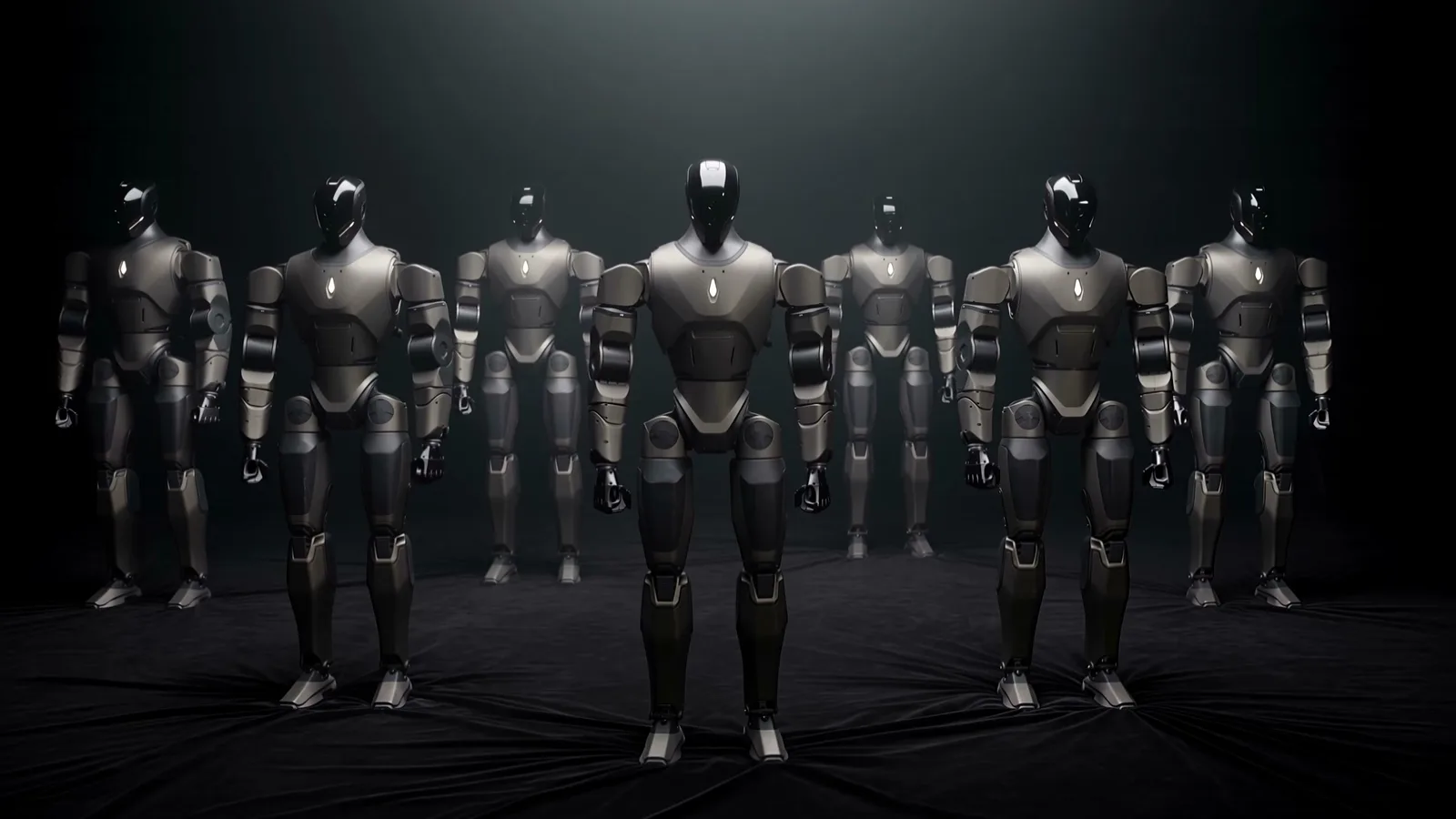
Foundation's New Phantom MKII Humanoid Is Built to Carry 200 Pounds in the Rain
San Francisco startup Foundation unveiled Phantom MKII, a 6 foot, 195 pound humanoid it says can carry 200 pounds, handle rain and dust with an IP67 rating and swap its joints in the field. Production is planned for early 2027.
So basically: A San Francisco startup called Foundation just showed off its second humanoid robot, the Phantom MKII. It’s about 6 feet tall, weighs 195 pounds, and the company says it can carry 200 pounds, which is more than the robot weighs. It’s also built to work in rain, dust and snow, and Foundation wants to start building it in early 2027.
What it is
Most humanoid robots you see are made for clean factory floors or warehouses. Foundation is going the other way. It’s aiming Phantom MKII at the dirty jobs: construction, manufacturing, logistics, mining and defense.
Here’s what Foundation lists on its own product page:
- Height: 6.0 feet
- Weight: 195 pounds
- Payload: 200 pounds, or 90 kilograms, which it calls a “close carry” payload
- Runtime: 4 to 6 hours from a 3 kWh battery
- Joints: 29 degrees of freedom
- Weather rating: IP67, the same kind of rating a lot of phones have for dust and water
Foundation says the robot can carry that weight while walking. Rockingrobots pointed out that nobody outside the company has verified that yet. Foundation did post video of a lifting test and a weather test where the robot gets hit with dust and water in Livermore, California.
The joints swap out
One of the more practical parts is the modular joints. If a joint breaks, you swap it out in the field instead of shipping the whole robot back. Foundation’s line on it is “They swap out so the work doesn’t stop.”
CEO Sankaet Pathak told Fast Company the redesign cut the robot’s bill of materials roughly in half. That’s the cost of all the parts that go into one robot, and it’s a big deal if you want to build thousands of them.
The brain
The robot ships with an AI system called Cortex II. The idea is you show it how to do a job and it learns from watching. Pathak said some tasks can be learned from as few as 60 demonstrations.
Foundation also says one control center could run a thousand robots working as a team. That’s the pitch, anyway. The company hasn’t published much technical detail on Cortex II yet, so that part is still mostly a promise.
The part that’s getting attention
Foundation counts Eric Trump among its investors and advisers, and it’s been open about military work. Pathak told Fast Company most of its defense work right now is logistics, like moving supplies. But he didn’t rule out putting weapons on the robots if the U.S. military asked.
”We’re not anti-weaponization and warfare,” he said. “That’s not something we have a blanket policy of just saying we’re not going to do.”
The company has previously said its earlier robots were tested with Ukrainian forces. Pathak also pushed back on a Financial Times report about talks with Israel’s military, saying there are only “very early exploration conversations.”
When it shows up
Foundation plans to start building Phantom MKII in the San Francisco Bay Area in early 2027. Pathak said the first goal is several hundred robots, then several thousand by the end of that year.
Along with the robot, Pathak put out a manifesto called “Shut Up and Build.” In it he argues robots could someday cut the cost of building a home worth $1 million down to $60,000 to $80,000. Rockingrobots noted there’s no cost model or real project behind that number yet. It’s a goal, not a result.
My take
The specs are what got me. A robot that weighs 195 pounds and carries 200 is a different kind of machine than the ones folding shirts in demo videos. And making it waterproof with swappable joints tells me they’re thinking about actual job sites, not trade show booths. The weapons stuff is going to follow this company around, and I get why. But the real test is simpler. If one of these is out hauling material on a muddy site in 2027 without breaking down every hour, that’s a big deal. Until then, it’s a strong spec sheet and a cool video.
So basically — pass it on.
Daily Updates
Get new stories in your inbox
Near-future tech when it moves. Robots, space, EVs, AI. No spam.