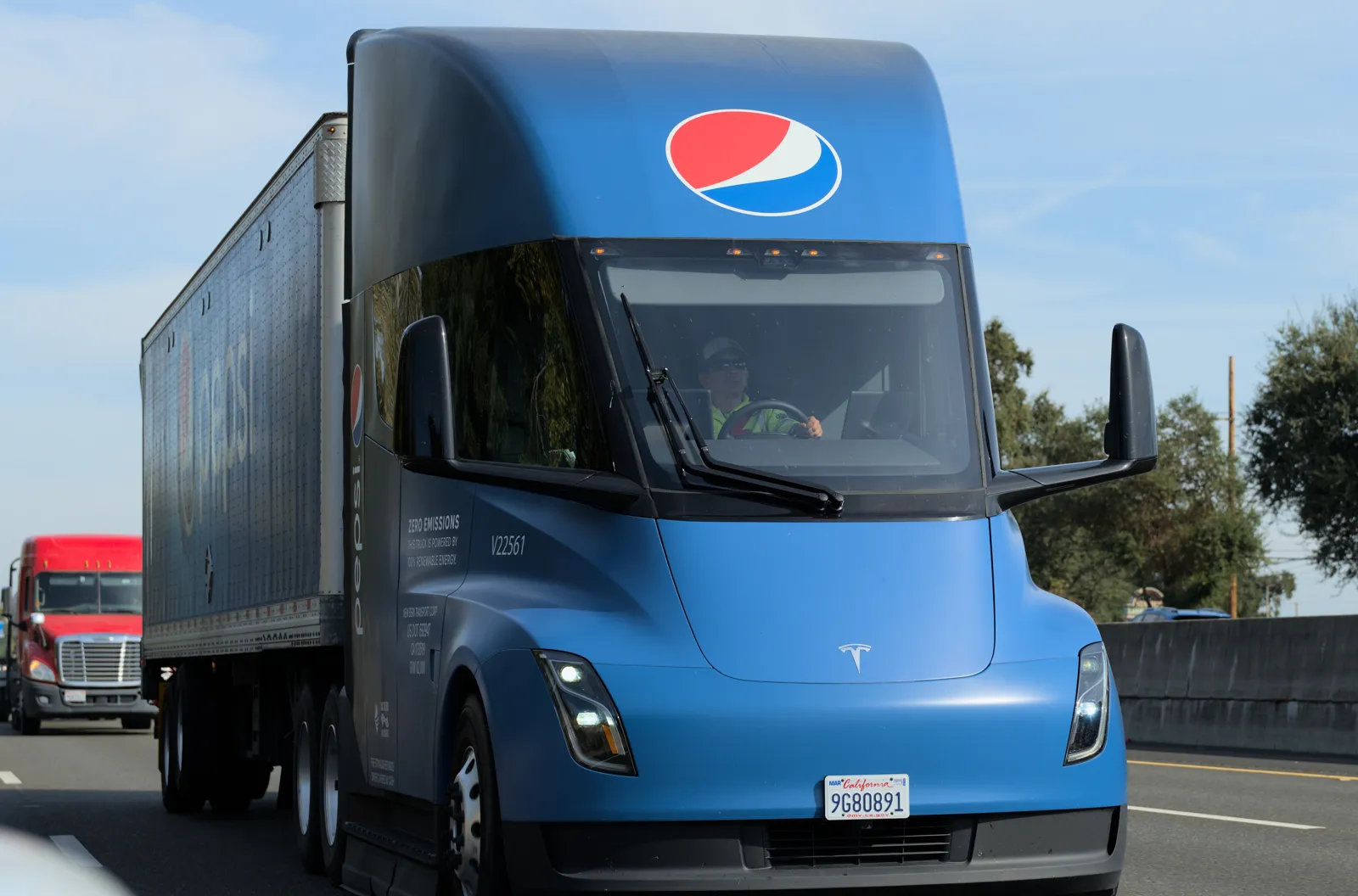
Electric Semis Are Getting Their Own Truck Stops Near LA's Ports
EV Realty bought a site in Ontario, California for its next electric big rig charging hub. Once it's built, the company will have 27 MW of truck charging between the ports of LA and Long Beach and the Inland Empire.
So basically: Electric big rigs need their own version of a truck stop, and one more is coming to Southern California. EV Realty bought a site in Ontario, California for its next electric semi charging hub. Once it’s running, the company will have 27 MW of truck charging spread between the Ports of Los Angeles and Long Beach and the Inland Empire warehouse zone. Construction starts early next year, with chargers live before 2028.
Why this spot
The new site is at 2151 E. Philadelphia Street in Ontario. If you’ve never been, the Inland Empire is basically one giant warehouse. EV Realty calls it the West Coast’s largest and most concentrated warehousing area.
The location checks every box for a truck:
- Right by the SR-60 and I-15 freeways
- On the route between the ports and the big rail yards in LA and San Bernardino
- About 3 miles from Ontario International Airport, one of the top 10 cargo airports in the country and a major hub for UPS and FedEx
”Ontario sits at the convergence of the nation’s largest container gateway and the densest warehouse cluster in North America,” EV Realty CEO Patrick Sullivan said. He called the area “the epicenter of truck electrification for this country.”
What makes a truck charger different
You can’t just pull a semi into a Tesla Supercharger at the mall. Big rigs need a lot more power, a lot more space to turn around, and room for the trailer. These hubs are designed with wide turning areas and pull through lanes so drivers don’t have to back a 70 foot rig into a spot.
They also need serious electricity. 27 MW of charging running at the same time across EV Realty’s sites is roughly the power draw of a small town.
The real bottleneck is power
Here’s the part people miss. The hard thing about electric trucks isn’t the trucks anymore. It’s finding a place with enough grid power to charge them. Southern California’s grid is stretched thin in a lot of areas, and a site that already has access to big power is worth a lot. Sullivan said exactly that: the way to scale is finding power in the right places and building out from there.
Why now
Diesel prices are hitting records, which makes the fuel savings on an electric truck easier to see. At the same time, more electric semis are hitting the road. BYD and Volvo are rolling out new generations of electric trucks, and the Tesla Semi is finally reported to be in production. Fleets buying those trucks need somewhere to plug in, and they want it on the routes they already drive.
The timeline
- This week: EV Realty acquires the Ontario site
- Early 2027: construction is expected to begin
- Before 2028: chargers come online
That’s not fast. Building anything that pulls this much power takes time, mostly waiting on the utility.
Why ports first
Port trucks, called drayage trucks, are kind of perfect for going electric. They drive short loops, from the docks to a warehouse and back, maybe 100 to 200 miles a day. They come back to the same area every night. And California has been pushing hard to clean them up, because diesel exhaust around the ports has been a health issue for nearby neighborhoods for years.
My take
Everyone talks about the trucks. Nobody talks about the truck stops. But that’s where electric freight actually lives or dies. A trucker isn’t going to switch if there’s nowhere to charge near the port. Putting hubs right where the containers come off the ships is the smartest place to start, because those trucks do short, repeat routes all day. If this works around LA, you’ll see the same thing pop up near every big port in the country over the next few years.
So basically — pass it on.
Daily Updates
Get new stories in your inbox
Near-future tech when it moves. Robots, space, EVs, AI. No spam.