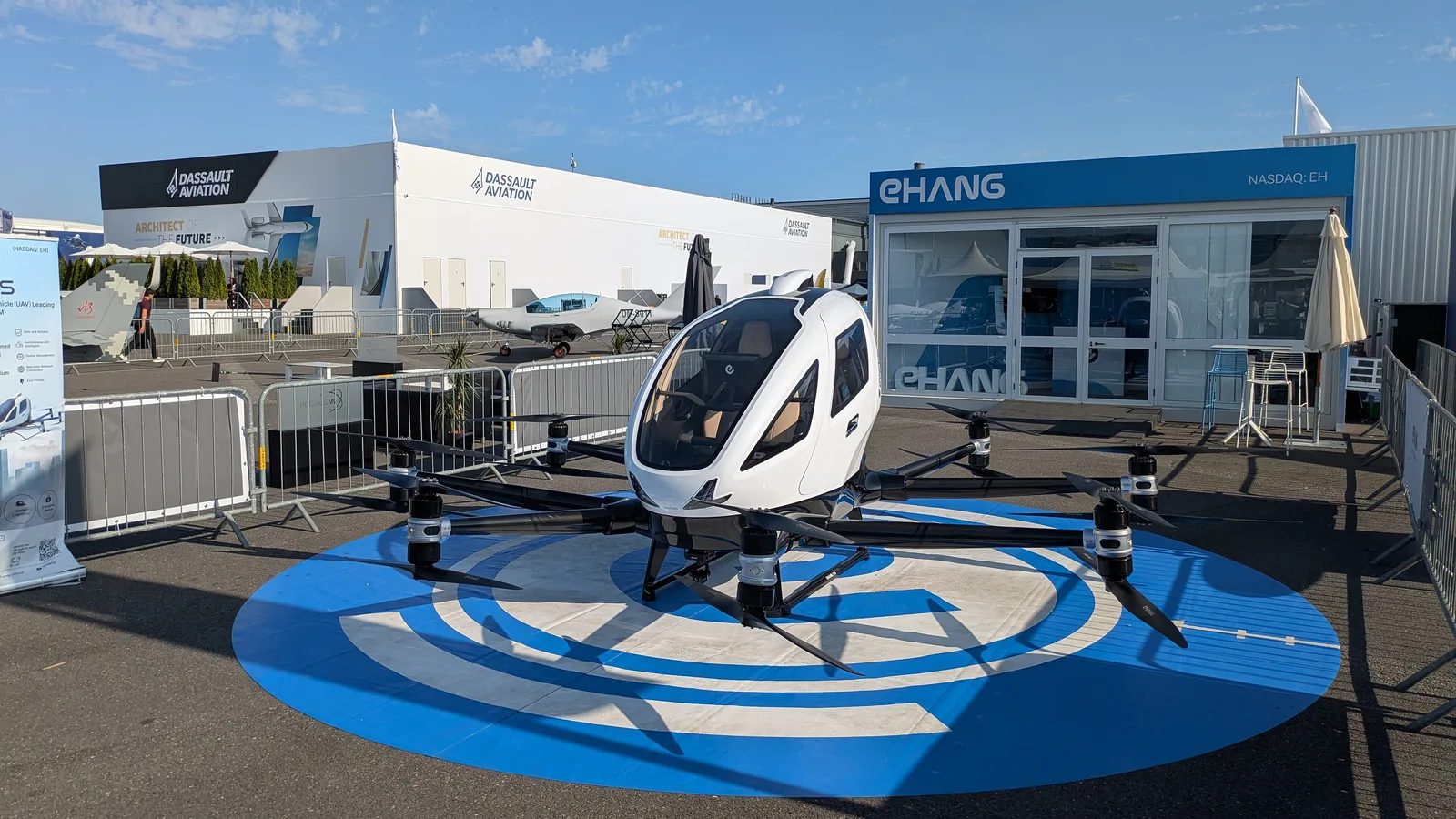
Sri Lanka's Aviation Minister Just Rode in a Pilotless EHang Air Taxi as Test Flights Begin
Sri Lanka gave Chinese company EHang a license to test its two seat pilotless EH216-S air taxi. The country's Ports and Aviation Minister and his deputy were the first passengers, and testing could run about five months before commercial service.
So basically: Two government officials in Sri Lanka just climbed into an air taxi with no pilot and went for a ride. The country gave EHang, a Chinese company that builds pilotless passenger drones, a license to start test flights of its two seat EH216-S. If testing goes well, paying passengers could be next in about five months.
What happened
On Wednesday, Nov. 11, EHang did a demo flight in Colombo, Sri Lanka’s biggest city. Sri Lanka’s Civil Aviation Authority announced it had granted EHang a license to test the aircraft.
The first two passengers were Ports and Aviation Minister Anura Karunathilaka and his deputy, Janitha Ruwan Kodithuwakku. That’s a pretty strong way to show you trust the thing. The person in charge of aviation in the whole country got in it first.
”Many countries around the world are trying to achieve this goal,” Kodithuwakku told reporters after his short flight. “Sri Lanka is now part of that race as well.” He said Sri Lanka is joining more than a dozen countries trying to start passenger drone services.
The route they want
The plan is an air taxi from the airport to downtown Colombo. That trip takes about half an hour by car, according to AFP. In a drone flying straight over traffic, it would be a lot shorter.
That’s the same pitch every air taxi company makes, from Dubai to New York. Airports are usually far from downtown, the roads in between are packed, and travelers will pay extra to skip it. A two seat aircraft that doesn’t need a pilot also means the company doesn’t have to pay one, which is a big part of how the price could come down.
What the EH216-S is
Sri Lankan officials shared the specs:
- 16 electric motors spinning 16 propellers
- 12 battery packs
- Maximum takeoff weight of 620 kg (1,367 pounds)
- About 25 minutes of flying time
- Range of up to 30 km (18 miles)
It seats two people and flies itself. There’s no stick and no pilot seat. It’s controlled by computers on board and a command center on the ground.
Having 16 motors is part of the safety pitch. If one or even a few quit, the others can keep it in the air.
Part of a bigger EHang push
This didn’t come out of nowhere. Back on Oct. 30, EHang announced a regional hub in Thailand and said it would park an initial fleet of 25 EH216-S aircraft there. It said test flights in Sri Lanka, Vietnam and Malaysia were planned for November, with a demo in Bangkok in December. Sri Lanka is the first of those to actually happen.
EHang is already flying passengers on sightseeing trips in China, where the EH216-S has the full set of certificates it needs to carry people commercially. Now it’s trying to get the same thing going in other countries before American companies like Joby and Archer get there.
What’s still unclear
AFP didn’t report what a ride would cost, how many aircraft Sri Lanka will start with, or the exact date paying passengers could fly. The five month test period is what the deputy minister said, and that could stretch.
Also, 25 minutes of flight time and 18 miles of range is fine for an airport run, but not much more. These are short hop aircraft for now.
My take
I love that the minister got in first. That tells you more than any press release. EHang is moving fast while US companies are still stuck in certification, and they’re picking countries that want to be early. Airport to downtown is the perfect first route too. That’s the trip everybody hates. If Sri Lanka actually has paying riders by spring, more countries are going to line up fast.
So basically — pass it on.
Daily Updates
Get new stories in your inbox
Near-future tech when it moves. Robots, space, EVs, AI. No spam.