A Pilotless EHang Air Taxi Just Carried a Passenger in Japan, Off an Aviation High School's Runway
Yamanashi Prefecture held its first flying car demo flights on November 20. An EHang EH216-S with no pilot carried one passenger about 380 meters, then flew about 1,800 meters over a river with nobody on board. Japan still hasn't certified any flying car design.
So basically: A Chinese built air taxi with nobody at the controls just carried a passenger in Japan. On November 20, Yamanashi Prefecture, the area right next to Mount Fuji, held its first ever flying car demo flights. An EHang EH216-S took off straight up, flew a pre-programmed route about 380 meters down a runway with one person inside, then did a second flight of about 1,800 meters over a river with no one on board.
Where it happened
The flights took off from the runway at Japan Aviation High School, a school in the prefecture that has its own airstrip, according to local station UTY TV Yamanashi.
The prefecture itself ran the demo. Its goal is pretty simple: let people see one of these things fly up close so they get used to the idea before it ever shows up as a real service.
Euronews said Mount Fuji was in the background as the aircraft lifted off, and the passenger waved through the glass at the crowd of visitors and reporters.
The two flights
Here’s how it went, per UTY TV Yamanashi and Euronews:
- Flight 1, with a passenger: The aircraft flew a round trip along the school’s runway, about 380 meters total, roughly 1,250 feet.
- Flight 2, empty: It took off from the runway, looped over the Kamanashi River and came back, about 1,800 meters, a little over 1.1 miles.
Both flights were autonomous. Nobody was flying it with a stick. The route was programmed ahead of time and the aircraft followed it on its own.
The aircraft
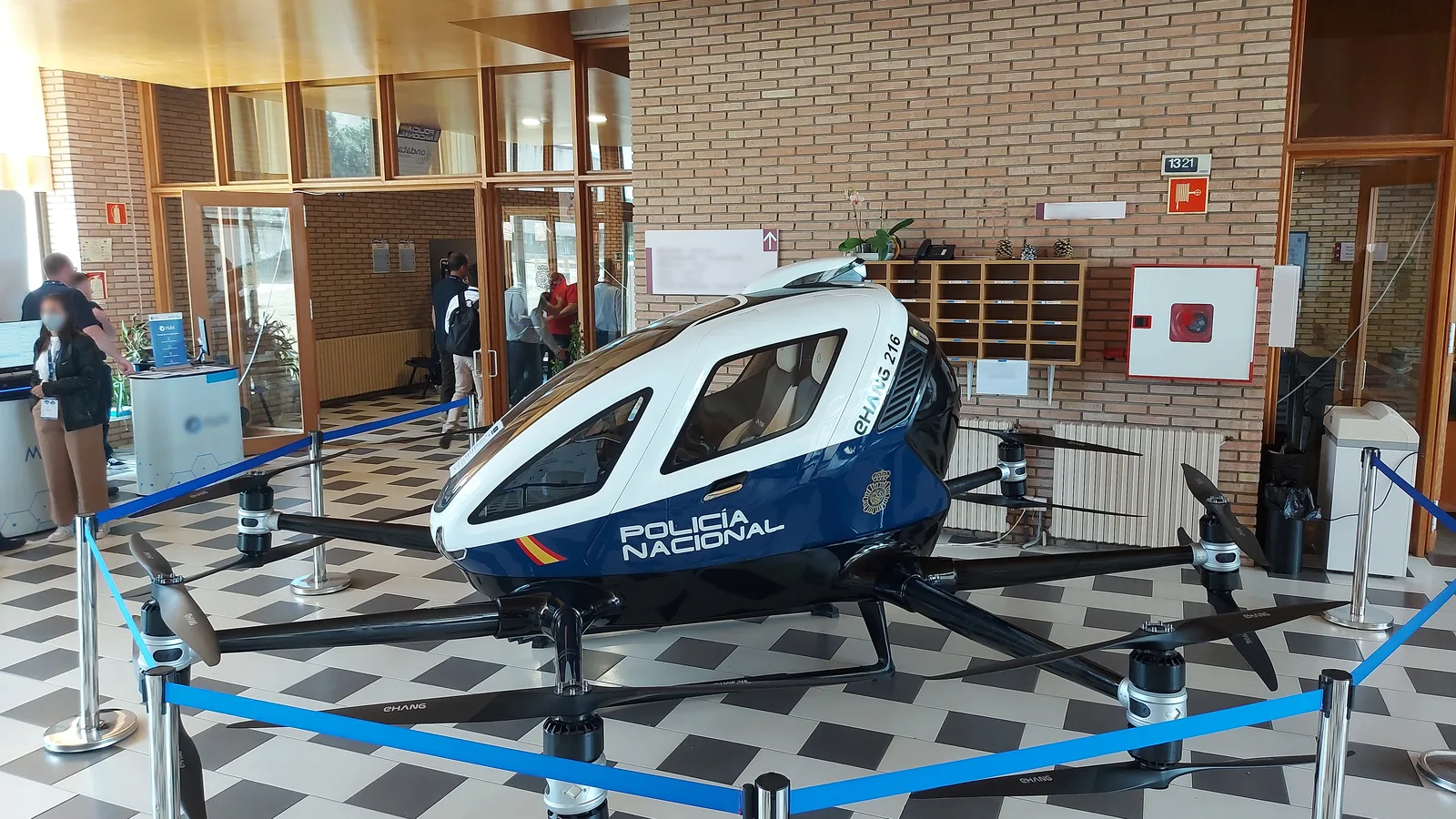
The EH216-S is a two seat, all electric aircraft from EHang, a Chinese company. It’s basically a big passenger drone:
- 16 propellers on eight arms
- Top speed of about 120 km/h, around 75 mph
- Range of about 30 km on one charge, around 19 miles
- Takes off and lands vertically, so it doesn’t need a runway at all
That last part is kind of funny here. The demo used an airport runway mostly as a safe, open space to fly over.
The catch
UTY TV Yamanashi was pretty blunt about where things stand in Japan:
- The national roadmap aims for flying cars to start commercial service in some areas next year or the year after.
- But as of now, no flying car design has gotten a safety certificate in Japan.
- Rules for things like noise and operator requirements still aren’t set.
So this was a public demo, not the start of a service. A prefecture official told the station they want to hold more demo flights so people can judge the safety and comfort for themselves and feel okay having these flying nearby.
The station also said the aircraft would fly again at the school’s air festival on November 21 and 22.
Why it matters
EHang has been doing these demo flights all over the world, and in China it already has approval to carry paying passengers. Japan is a big market to crack, and it’s been talking about air taxis for years. Getting regular people to watch one fly, and even ride in one, is a real step, even if it’s a small one.
My take
380 meters isn’t much of a trip, but that’s not really the point. The point is a regular crowd stood there and watched a person ride in an aircraft that nobody was flying. That’s the mental hurdle these companies have to get people over. Doing it at a high school air festival with Mount Fuji behind it is about as friendly as a first impression gets. What I want to see next is Japan actually certify one of these. Until a design gets that safety stamp, every flight like this is a show, not a service.
So basically — pass it on.
Daily Updates
Get new stories in your inbox
Near-future tech when it moves. Robots, space, EVs, AI. No spam.