Dassault Just Quit Researching Hydrogen Planes, and Its Biggest Falcon Jet Is Why
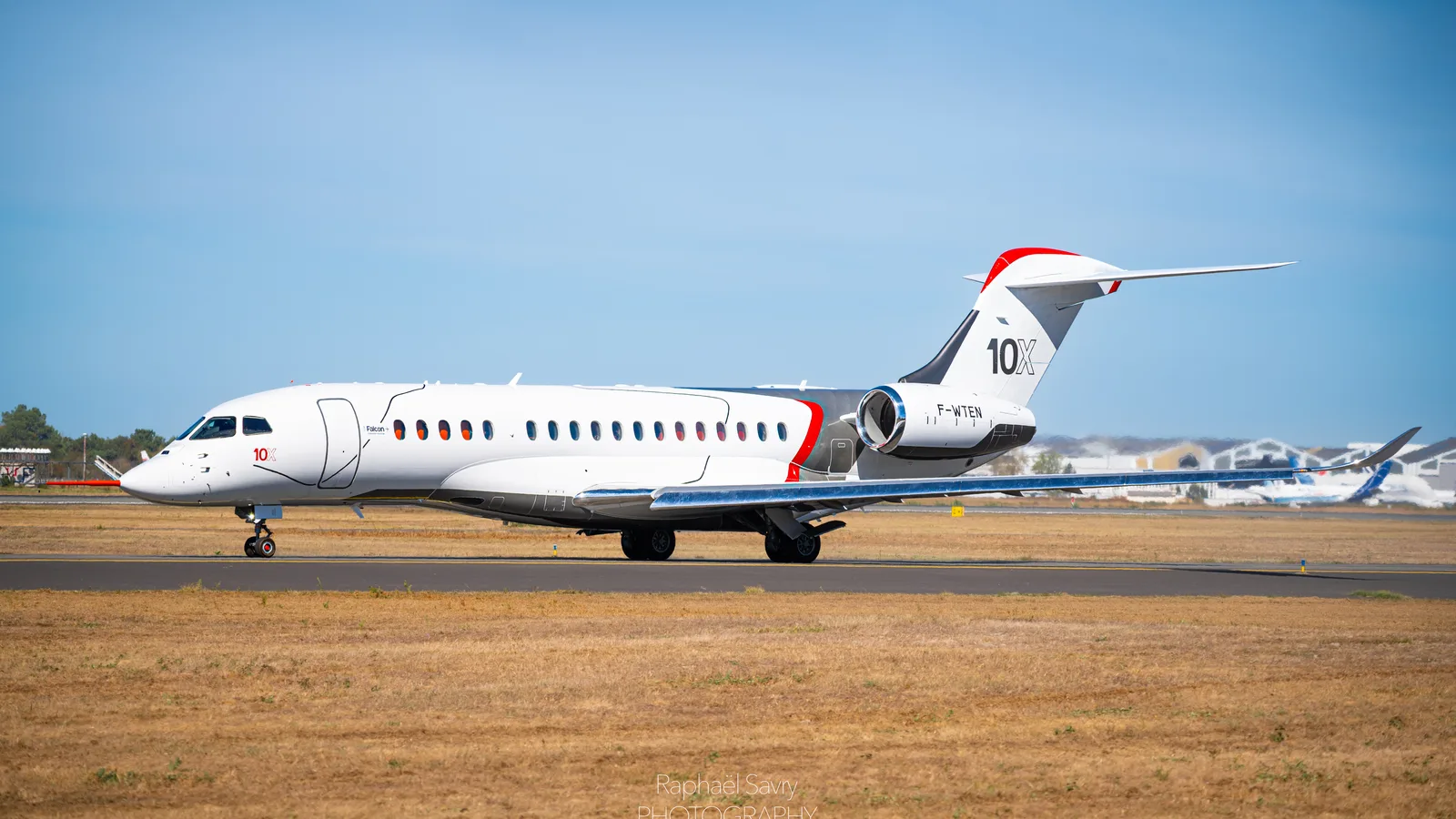
Dassault Aviation CEO Éric Trappier said on French radio that the company has stopped researching hydrogen aircraft, saying the fuel can't power a long range business jet like the new Falcon 10X. Dassault is betting on sustainable aviation fuel instead.
So basically: Dassault Aviation, the French company that builds Falcon business jets and Rafale fighter jets, has stopped researching hydrogen powered airplanes. CEO Éric Trappier said it flat out on French radio station RTL on Sunday: “At Dassault, we have stopped researching.” His reason is pretty simple. You can’t fit enough hydrogen in a plane the size of the company’s new Falcon 10X to fly it where it needs to go.
The problem is space, not weight
Hydrogen has a weird trait. Pound for pound, it holds more energy than jet fuel. But it’s so light and fluffy that it takes up a huge amount of room.
Even when you cool it into a liquid, you need about 4 liters of hydrogen to get the same energy as 1 liter of jet fuel, according to French hydrogen news site H2 Mobile. And liquid hydrogen has to be kept at about minus 423°F, or minus 253°C. That means big, heavy, super insulated tanks.
On a small plane making short hops, you might find room for that. On a long range business jet, every bit of space inside matters.
Why the Falcon 10X is the example
The Falcon 10X is the biggest jet in the Falcon lineup, and it’s built to fly about 7,500 nautical miles without stopping. That’s roughly 8,600 regular miles, which is intercontinental range. The first one flew in June.
Trappier said that, “as far as we can see,” there’s no way to fly a plane that size on hydrogen. In his words, “the technology is not mature.”
This didn’t happen overnight
Dassault never announced a hydrogen Falcon, so no actual airplane program got canceled. What stopped is the research.
You can see his view shift over the years:
- In 2020, Trappier called hydrogen a serious option, with test planes maybe around 2035
- In 2023, he told French senators that Dassault wouldn’t put its own money into hydrogen planes
- Now, in 2026, the research is done
What Dassault is doing instead
Trappier is betting on sustainable aviation fuel, or SAF. That’s jet fuel made from things like waste oils and plants instead of crude oil. It works in the engines planes already have.
Falcon jets are already certified to fly on blends of up to 50% SAF, and Dassault is working with engine makers to get to 100%. Trappier also wants tax breaks to make biofuels cheaper, plus more efficient engines and newer planes replacing old ones.
Not everybody agrees
Other companies are still chasing hydrogen, mostly for smaller planes and shorter trips:
- Airbus pushed back the timeline on its hydrogen airliner project, called ZEROe, and shifted it toward fuel cells, but it’s still putting money into it with engine maker MTU Aero Engines
- Beyond Aero, a French startup, is building a six passenger hydrogen electric business plane aimed at about 800 nautical miles of range
That’s the real split. Hydrogen might make sense for short flights. Dassault is saying it doesn’t make sense for planes that cross oceans.
My take
I respect this. Hydrogen airliners have felt like they’re always about a decade away, and that’s been true for a long time. Dassault just looked at its biggest jet, did the math on tank space, and said no. That’s not anti green, it’s honest. I do think hydrogen still has a real shot on small, short range planes, which is exactly where Beyond Aero is aiming. But for big jets flying 7,500 nautical miles, cleaner fuel that works in today’s engines looks like the realistic path for a long time.
So basically — pass it on.
Daily Updates
Get new stories in your inbox
Near-future tech when it moves. Robots, space, EVs, AI. No spam.