A Small Robot Just Built Part of a Structure in Orbit With No Astronauts, and It Took Six Months of Fixing Surprises
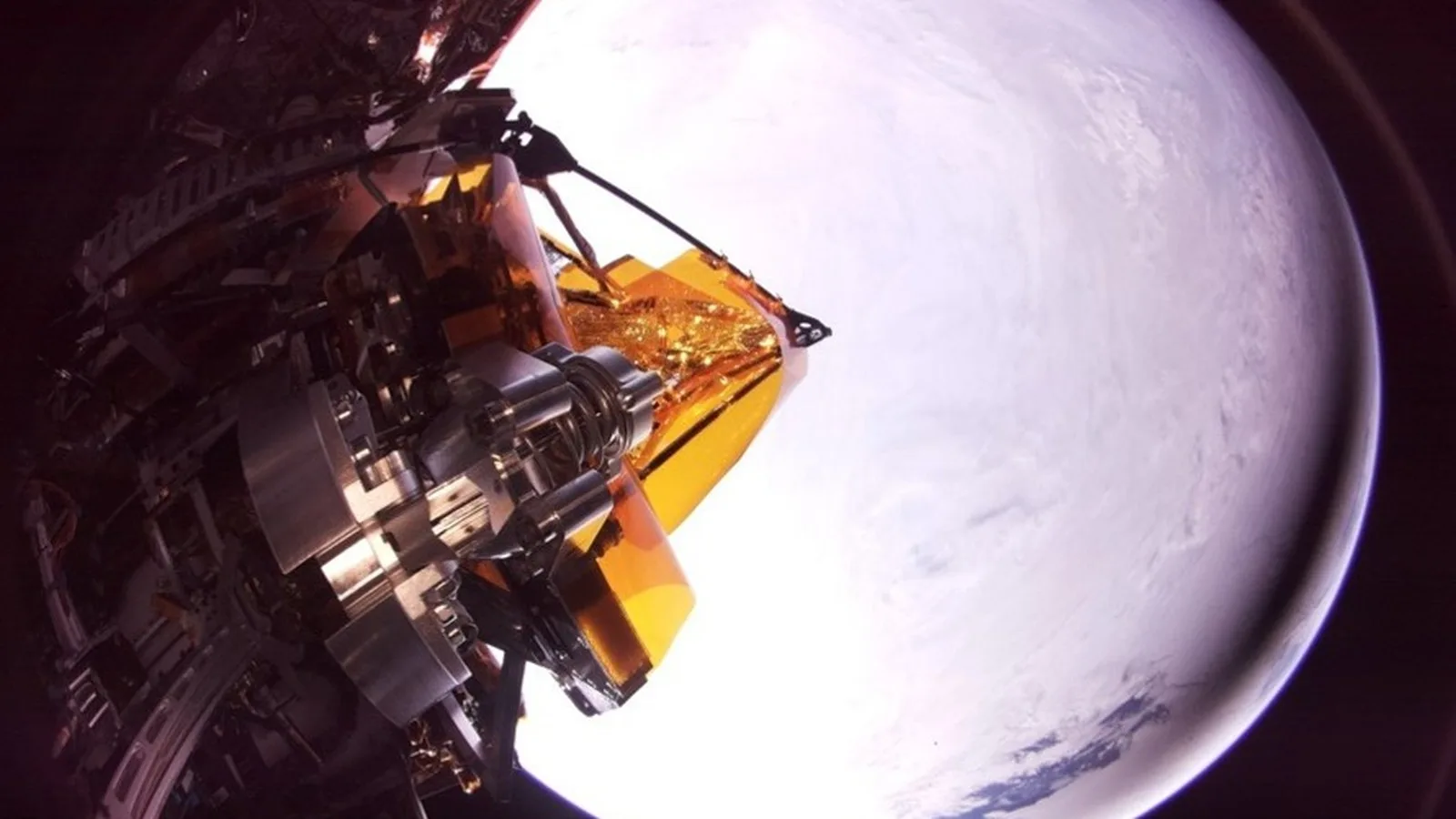
On Nov. 5, 2026, DARPA and Caltech said the ASTRA payload built a third section of a truss in orbit on its own, the first automated assembly of a structure in space. It launched March 30 and was built to show how huge antennas could be assembled in space instead of folded into a rocket.
So basically: A little robot arm in orbit just put together part of a truss, which is basically a frame made of sticks and joints, with nobody up there to help. DARPA and Caltech announced it on Nov. 5, 2026, and they say it’s the first time a structure has been built automatically in space.
What it actually is
The project is called ASTRA, short for Autonomous In-Space Tensioned Reflector Assembly. Caltech built it with money from DARPA, the Pentagon’s research agency, as part of a program called NOM4D.
The whole thing is about 1 cubic meter, so roughly the size of a big cardboard box. Inside is a robot arm, a bunch of motorized dispensers loaded with composite tubes and aluminum joints, and a thin reflective film.
DARPA compared it to a Tinkertoy or K’Nex set. The arm picks up pieces, snaps them together into one section of the frame, which they call a bay, and then attaches the reflective netting. Then it pushes that bay out into space and starts the next one.
How it got there
ASTRA launched on March 30, 2026 from Vandenberg Space Force Base. It rode on a SpaceX Transporter-16 mission, as one of 10 payloads on a spacecraft called Vigoride 7 from a company named Momentus.
It went up with two bays already built. The arm’s job was to build a third one in orbit, and it did.
It wasn’t smooth
The team said there were “many” unexpected problems. The ground crew only gets about seven or eight windows a day, about 15 minutes each, to talk to the payload.
So they built a twin of it, a spare copy in a lab at Caltech. Every time something went wrong in orbit, they tried to copy the problem on the twin, worked out a fix, and sent the fix up to the one in space.
Because of all that, ASTRA is not going to finish the whole job. The full truss needs 11 bays, and the mission ends in December. So only the third bay got built, and the team says that was enough to show the idea works.
Why bother
Right now, everything you launch has to fit inside the nose of a rocket. You either fold it up and hope it unfolds, like the Webb telescope, or you launch pieces on several rockets and have astronauts put them together.
DARPA wants a third way: ship a box of parts and have a robot build the thing where it will live. The NOM4D program manager, Andrew Detor, said they’re aiming for structures hundreds of meters or even kilometers across. He said nothing close to that can be built today.
Those could be giant antennas, bigger telescope mirrors, huge solar arrays, or space depots and habitats.
DARPA also pointed out how fast this moved. They went from the idea of flying a demo to launching a working prototype in 15 months.
What’s next for the program
There’s one more piece of NOM4D to come. A team from the University of Illinois will send an experiment to the International Space Station later this year to test a special resin that hardens carbon tubes in space, which would be another way to make strong structures up there.
My take
What I like about this one is how plain it is. DARPA’s own program manager said there are no fancy robots or advanced algorithms here, just solid engineering. It’s a simple arm building one box of frame at a time.
It also didn’t go perfectly, and they admitted that, which makes it feel more real to me. They only got one bay done, but now they know what breaks. If this works out at scale, the biggest things humans put in space might never ride on a rocket whole. They’d get built on site, one little section at a time.
So basically — pass it on.
Daily Updates
Get new stories in your inbox
Near-future tech when it moves. Robots, space, EVs, AI. No spam.