A Robinhood Co-Founder's Space Company Just Showed Off a 282 Foot Rocket Whose Top Half Stays in Orbit as a Data Center
Cowboy Space, the company started by Robinhood co-founder Baiju Bhatt, unveiled Big Iron on Oct. 26, 2026. It's an 86 meter stainless steel rocket whose upper stage unfolds into a megawatt-class data center in orbit, with a first flight targeted for 2028.
So basically: A company called Cowboy Space just showed off a rocket called Big Iron, and the weird part is what happens after launch. Most rockets drop off a satellite and the top stage gets thrown away. On Big Iron, the top stage doesn’t get thrown away. It becomes the satellite. It unfolds into a data center full of computer chips and stays up there running. The company announced it Monday night, Oct. 26, and it’s aiming for the first flight in 2028.
Who is Cowboy Space?
It used to be called Aetherflux. It was started by Baiju Bhatt, one of the two guys who co-founded Robinhood, the stock trading app. The company is based in San Carlos, California, and it has a team in Seattle too.
Their original goal was beaming solar power down from space with lasers. Their first satellite, Reason-1, went up on Oct. 1 on a SpaceX ride share, and it’s meant to test that laser power beaming. Somewhere along the way they decided the bigger opportunity was running computers in orbit, where the sun never stops shining on your solar panels.
Bhatt said they set out to build data centers in space and found there weren’t enough rockets to get them there, so they’re building their own.
How big is Big Iron?
It’s 86 meters tall, which is about 282 feet. That’s about as tall as a 25 story building. It’s made of stainless steel, like SpaceX’s Starship, and the bottom half, the booster, is meant to land and fly again.
The booster has nine engines called Clydesdales, and each one pushes out 300,000 pounds of thrust. They burn liquid oxygen and methane. The company says it tested part of the Clydesdale at NASA’s Stennis Space Center last week, and a team of about 30 people built and tested the combustion chamber in 90 days.
They also sized the rocket so it can be moved by truck on regular roads, which keeps building costs down.
The part where the rocket turns into a computer
This is the clever bit. Once the upper stage reaches orbit, a bunch of its rocket parts get a second job:
The rocket’s outer skin becomes the radiator that dumps heat from the chips. The ammonia it carries as fuel becomes the coolant. And the nitrogen gas that pressurizes the tank is used to push out the solar wings.
When it’s all unfolded, each one is about 132 meters by 73 meters, which is bigger than a football field. It carries five racks of Nvidia’s newest AI chips. Every launch adds another one to the fleet instead of leaving junk behind.
The company has asked the FCC for permission to fly up to 20,000 of these in a group it calls Stampede. Yes, the whole thing is cowboy themed. The rocket is Big Iron, the engines are Clydesdales, and the fleet is a stampede.
Other people can ride too
Cowboy also announced Big Iron Express, which lets outside companies and the government buy space on the rocket. The rocket can carry more than 15,000 kilograms, or about 33,000 pounds, into orbit. Right now there aren’t many rockets available to launch stuff, and most of the big ones belong to SpaceX.
Their COO did admit government customers want to see a rocket that has actually flown first, and said they “still have a lot of executing to do.”
My take
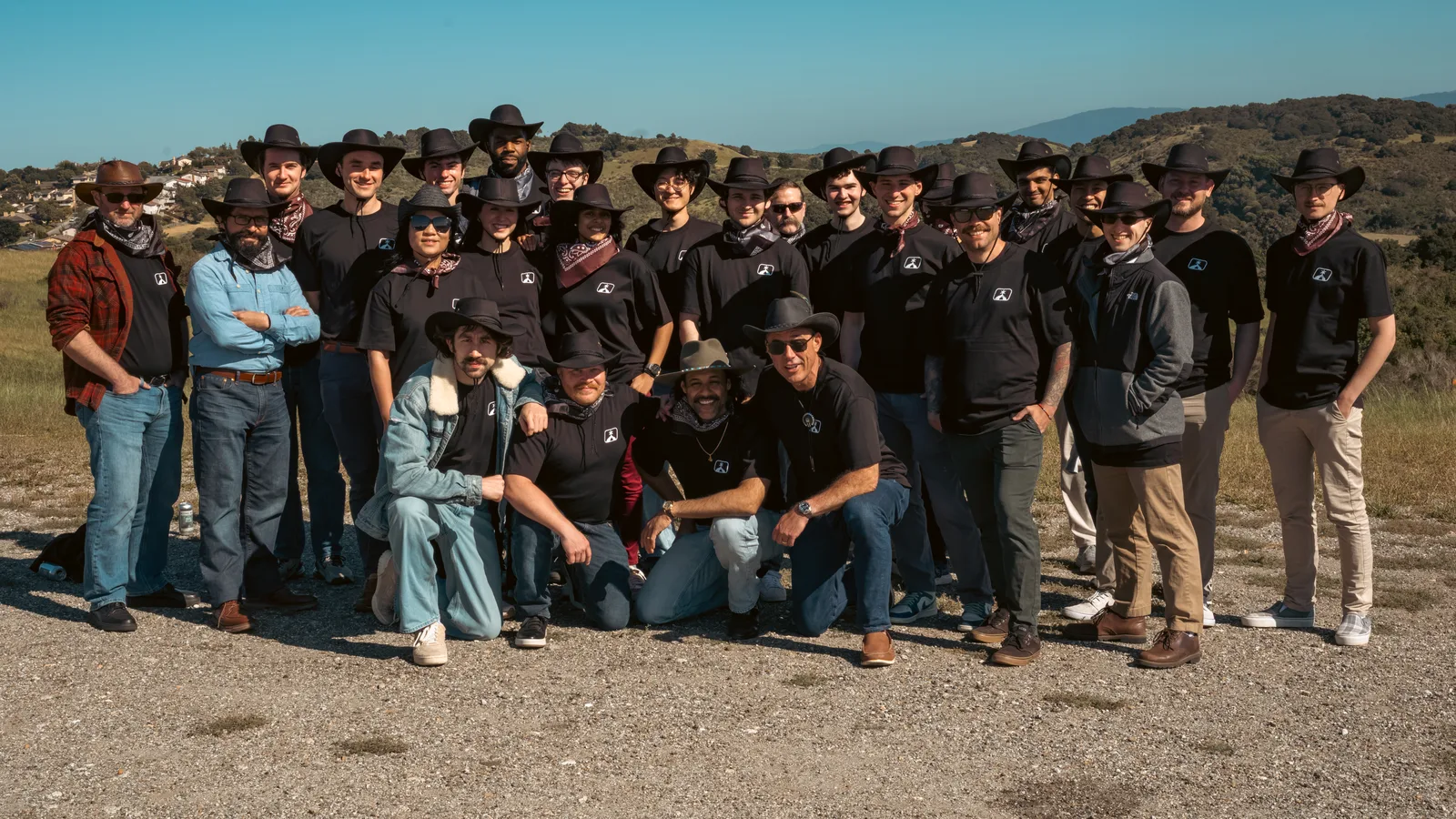
I’ll be honest, when I first read “the rocket turns into a data center,” it sounded like a made up headline. But the more I read, the more it made sense. If you’re going to haul all that metal into space anyway, why throw it away? Use the skin as a radiator and the fuel as coolant. That’s the same way folks around here treat old farm equipment. Nothing gets wasted. Now, they haven’t launched a single rocket yet, and 2028 is a long way off in rocket years. But I’m going to keep an eye on these guys, and not just because they wear cowboy hats in their company photos.
So basically — pass it on.
Daily Updates
Get new stories in your inbox
Near-future tech when it moves. Robots, space, EVs, AI. No spam.