Boston Dynamics' New Stretch Robot Unloads Up to 1,000 Boxes an Hour and Ditched Half a Mile of Wiring
Boston Dynamics launched Stretch Gen 2, its truck unloading robot. It can move up to 1,000 cases an hour, run two shifts on a charge, grab several boxes at once, and has 81% less internal cabling than the first version.
So basically: Boston Dynamics just launched Stretch Gen 2, the second version of its robot that unloads boxes from truck trailers. It can move up to 1,000 cases an hour, run two full shifts on one charge, and grab more than one box at a time. It’s already working at multiple customer warehouses.
What Stretch does
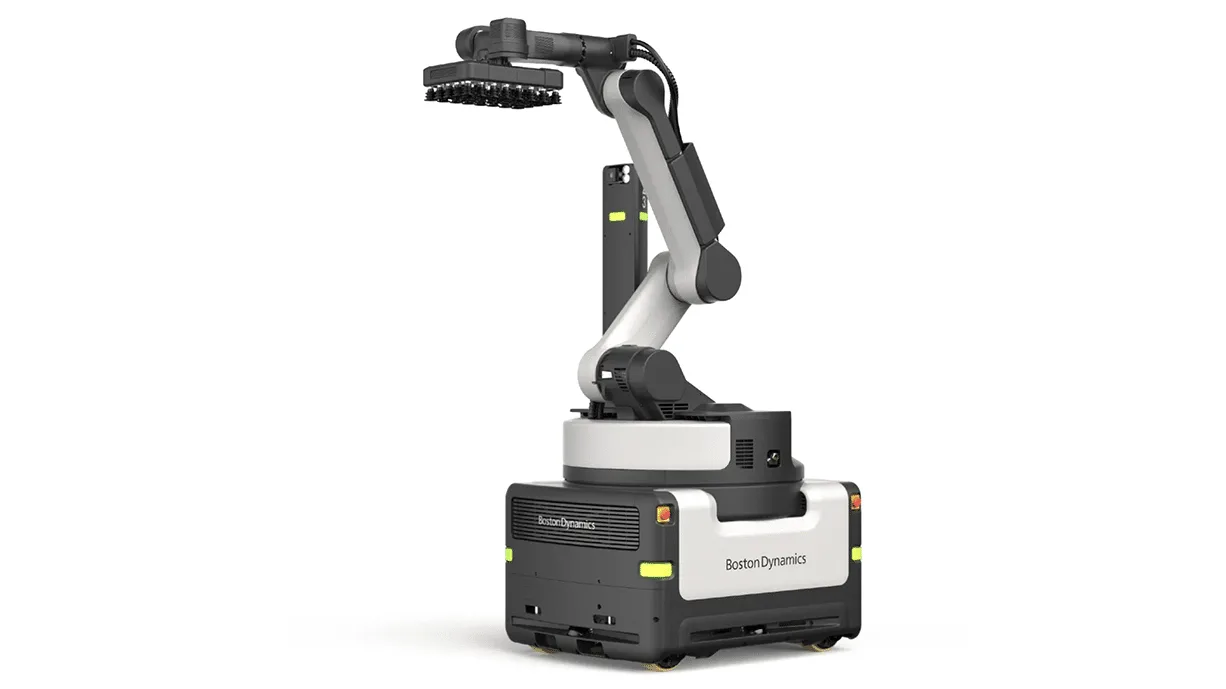
Stretch isn’t a humanoid. It’s a square wheeled base with a big robot arm and a suction cup gripper on the end. A worker drives it into a trailer, steps out of the safety zone, hits a big Play button, and the robot pulls boxes off the stack and puts them on a conveyor until the trailer is empty.
Boston Dynamics says the first version has already logged more than 100,000 hours of work and handled tens of millions of boxes.
What’s new in Gen 2
Here’s what changed, according to the company and its logistics boss Brian Donnelly:
- Up to 1,000 cases per hour, depending on box weight and how messy the stack is
- A battery that lasts two shifts, and a fast charger that gets it to 90% in about 75 minutes
- A new gripper with a valve in every suction cup, so it can pick several boxes in one move
- 81% less internal cabling, about half a mile of wire gone
- Joints that spin past 360 degrees so they never slam into a hard stop
- Built in lights for dark trailers, and a vision system that spots most boxes with no setup
Why cutting wire matters
This sounds boring, but it might be the biggest upgrade. Donnelly told The Robot Report that cables are weight, cost and failure points, especially on a robot that’s moving nonstop. Every motion bends them a little.
Hyundai, which owns Boston Dynamics, helped them get a cable harness through its car parts supply chain. They also switched to automotive grade connectors that latch, so they don’t wiggle loose from all the vibration.
Faster repairs
Gen 1 wasn’t easy to fix. Boston Dynamics admits it rushed the first version to market. On Gen 2, swapping a full drive module takes about one hour. Before, it could take an entire day.
The new robot also has onboard diagnostics, so a warehouse’s own maintenance crew can handle more of the routine work without waiting on Boston Dynamics.
It keeps getting faster with software
Boston Dynamics pushes new software about once a month. Donnelly said the most recent update boosted unload speed by 24% across the whole fleet of robots already in the field, with no hardware changes.
He also said Gen 2 robots are being deployed at existing sites within two weeks.
The job it’s taking
Donnelly called trailer unloading “one of the worst jobs in the warehouse,” and he’s not wrong. Trailers bake in the summer and freeze in the winter. You’re lifting heavy boxes from the floor and from over your head all day. The people now running the robots are often the same people who used to do that lifting.
Boston Dynamics didn’t share a price or how many Gen 2 units are out there.
My take
Humanoids get all the hype, but Stretch is the Boston Dynamics robot that actually pays its own way today. It does one hard, miserable job over and over, and Gen 2 is all about doing it longer without breaking.
Pulling half a mile of wire out of a robot and making a one day repair take one hour is not flashy. It’s exactly the stuff that decides if a warehouse keeps buying robots after the first one. And a 24% speed boost from a software update is a reminder that the robot you buy today can get better on its own.
So basically — pass it on.
Daily Updates
Get new stories in your inbox
Near-future tech when it moves. Robots, space, EVs, AI. No spam.