Boston Dynamics Put Scooter Wheels on Atlas, and Now It Drifts and Spins
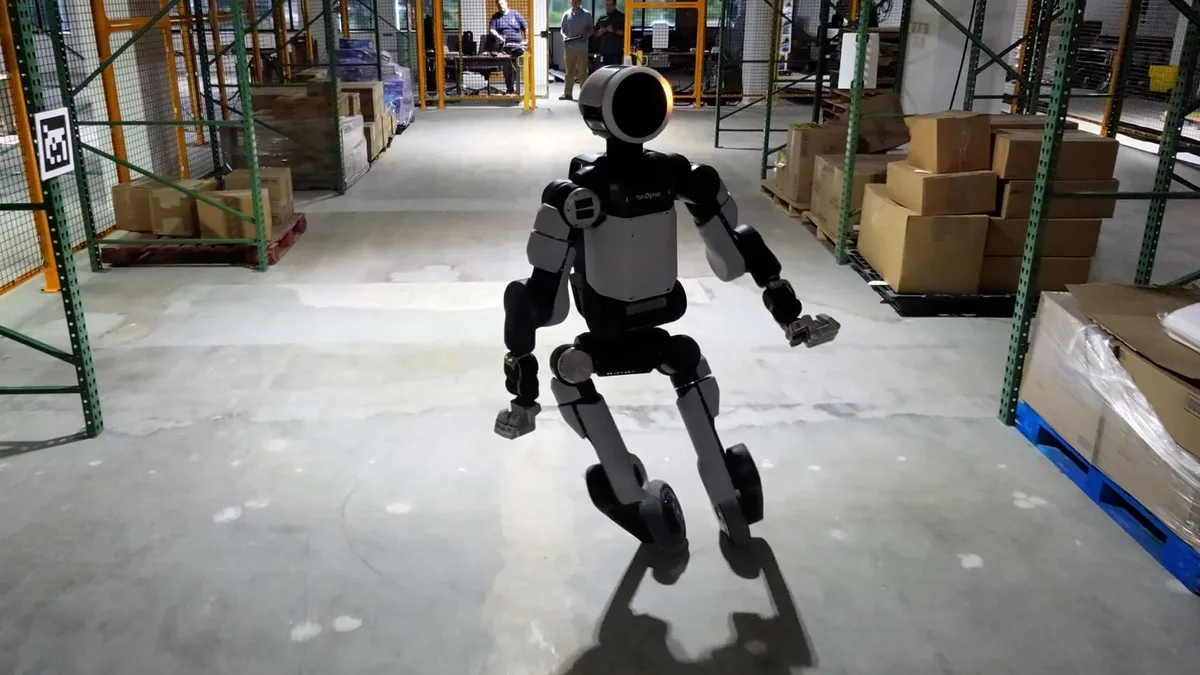
Boston Dynamics bolted off the shelf scooter rims onto its Atlas humanoid's ankles to push its motors to the limit. The wheeled robot rolls, drifts, side dashes and even pulls off a 360 degree jump.
So basically: Boston Dynamics swapped the feet on its Atlas humanoid robot for wheels. Not fancy custom wheels either. Regular off the shelf scooter rims. Now Atlas rolls around, drifts, slides sideways and even does a 360 degree jump. The company is clear that this isn’t a product. It’s a test to see how hard Atlas’ motors can be pushed.
Why put wheels on a humanoid?
The engineer behind it, Andy Wu, works on the motors and the electronics that drive them. His job is making sure Atlas’ joints behave the same way every time, even at their limits.
He needed a way to make the motors work as hard as possible for a long time while carrying real weight. Driving on wheels does exactly that. Every launch, turn and stop pushes the motors through their full range of speed and power.
”So the wheels weren’t really the point of this,” Wu said in the video. “The point was pushing the actuation to its limits.”
The easiest robot upgrade ever
This is the part that surprised me. The whole conversion needed one new part. A single custom adapter bolts a scooter rim onto Atlas’ existing ankle motor.
Boston Dynamics says that because Atlas was designed from the start to be built in big numbers and be easy to fix, the swap was “about as involved as swapping a wheel on a bicycle.”
The software change was simple too. Each wheel is treated like an ankle that can spin forever. Wu just took the normal robot model and swapped the feet for wheels.
It learned to skate in a simulator
Atlas didn’t figure out how to roll by falling over a thousand times in a warehouse. It learned in a computer simulation first, running through millions of practice runs, then the same brain was loaded onto the real robot.
That only works if the fake motors in the simulation act like the real ones. A lot of Wu’s work was the boring part: measuring the real motors, tuning the simulated ones to match, and making sure the settings lined up everywhere.
It paid off. Wu said the moves transferred to the real hardware “basically perfectly.”
The tricks
Some of Atlas’ moves came from motion capture recordings of real people. Wu went looking for clips with a lot of foot sliding, because that’s where wheels would get interesting.
- Side dashes: Where a person would slide their feet, Atlas figured out on its own how to steer its wheels and roll through it.
- The 360 jump: It looks wild, but Wu said it was actually one of the lower risk moves. Atlas was copying a recording of a human doing the jump, and it worked on the first try.
- Drifting: Wu said driving it around and watching it slide is “like playing a video game.” He hasn’t touched his gaming rig since starting the project.
What’s next
Wu is already working on the next question: what happens when one of Atlas’ motors fails? He wants to see if the robot can learn to work around a broken joint on its own, which is a big deal for safety.
Boston Dynamics says what it learned here is already going back into the normal, walking version of Atlas. The robot is also headed for more testing at Hyundai facilities, according to The Robot Report.
Wheels or legs?
This adds to a big debate in robots right now. Some companies build humanoids with wheels because floors in factories are flat and wheels are cheaper and faster. Others say legs are a must because the world has stairs and curbs. Boston Dynamics isn’t picking a side here, but it just showed Atlas can do both.
My take
Honestly, this is the most fun robot video I’ve seen in a while. But the real story is how easy the swap was. One adapter, a scooter rim and a software tweak, and suddenly your humanoid is a different machine.
That tells you Atlas is built like a real product now, not a lab toy. And if you can retrain a robot that fast for a totally new body, imagine how fast these things will learn new jobs.
So basically — pass it on.
Daily Updates
Get new stories in your inbox
Near-future tech when it moves. Robots, space, EVs, AI. No spam.