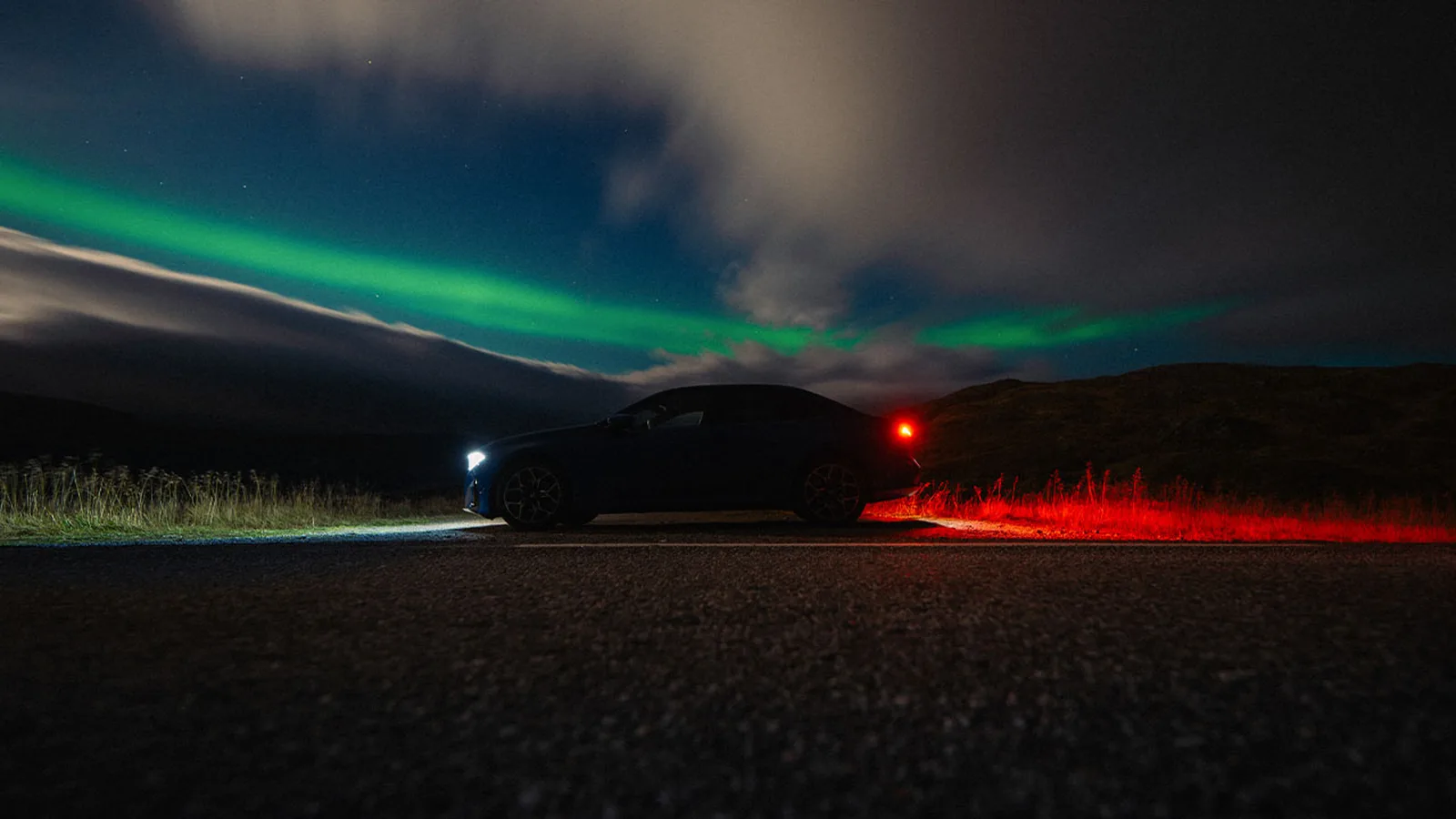
BMW's New Electric i3 Crossed All of Europe With Less Than 3 Hours of Charging
A production BMW i3 50 xDrive drove 5,886.7 km from Norway's North Cape to Tarifa, Spain, and spent just 2 hours, 45 minutes and 54 seconds plugged in. BMW says that beat the old Paneuropeana record from 2017 by more than seven hours.
So basically: BMW took its new all electric i3 50 xDrive sedan from the top of Europe to the bottom. That’s 5,886.7 kilometers, about 3,658 miles, from the North Cape in Norway to Tarifa in Spain. The whole trip, it spent just 2 hours, 45 minutes and 54 seconds at chargers. BMW says that’s a new record, and it beat the old one from 2017 by more than seven hours.
What the rally is
It’s called the Paneuropeana, and it’s a rally for electric cars where the fastest driver doesn’t win. The winner is whoever spends the least time charging while hitting all the checkpoints on the way.
The rules make it a real world test:
- The car has to be a production model. BMW says all its cars had the same hardware and software customers get.
- You can only use public chargers that anybody can pull up to.
- Nobody tells you where to charge. The team plans its own stops based on weather, traffic and which chargers are fast enough.
- The route runs through normal traffic, cities, country roads and highways.
The record car only ever had one engineer in it. The rest of the team followed in a second i3 and a BMW iX3.
The route
The North Cape sits on a Norwegian island called Magerøya. BMW says it’s the northernmost point in Europe you can reach by car, about 2,100 kilometers from the North Pole.
From there the car went through eight countries: Norway, Finland, Sweden, Denmark, Germany, Luxembourg, France and Spain. It finished in Tarifa, at the southern tip of mainland Europe.
The numbers
Here’s what BMW published:
- Driving time: 3 days, 2 hours and 41 minutes
- Average speed: 79.7 km/h, about 50 mph
- Average energy use: 12.5 kWh per 100 km
- Total charging time: 2 hours, 45 minutes, 54 seconds
- Average charging power: 275 kW
That energy number is the one that matters. The official test rating for this car is between 13.4 and 18 kWh per 100 km. On this trip it used less than even the best end of that.
If you do the math on BMW’s numbers, the car used roughly 735 kWh for the whole trip. That’s my math, not BMW’s. With a battery that holds 108.7 kWh, that’s close to seven full batteries’ worth of energy, and it got all of it in under three hours of total charging.
Why it charged so fast
This i3 is built on BMW’s new Neue Klasse tech, and it’s the first all electric 3 Series sedan. A few things make it good at this:
- It can charge at up to 400 kW on a fast DC charger.
- BMW says 10 minutes of charging can add up to 423 km of range on the official test cycle.
- Its official range is up to 912 km, about 567 miles.
- It has a drag coefficient of 0.21, which BMW says makes it the most aerodynamic BMW ever. Less drag means less energy burned at highway speed.
So it doesn’t need to stop much, and when it does, it fills up fast.
What BMW said
Mike Reichelt, who runs the Neue Klasse compact and midsize cars at BMW, put it like this: “With a total charging time of just two hours and 46 minutes, we beat the previous record from 2017 by more than seven hours.”
BMW also notes that real world use will vary depending on how you drive, how fast you go and the weather. That’s fair. A pro team planning every stop around the fastest chargers isn’t the same as a family road trip.
My take
The thing people always bring up about electric cars is road trips. How long are you going to sit at a charger? This is a pretty good answer. Under three hours of charging across an entire continent, in a car anybody can buy, using chargers anybody can use. Sure, it was a pro team picking perfect stops. But even if a normal driver doubled that time, it’s still not bad for nearly 3,700 miles. The bigger story to me is efficiency. Using less energy than its own official rating on a trip that long says a lot about where these cars are heading.
So basically — pass it on.
Daily Updates
Get new stories in your inbox
Near-future tech when it moves. Robots, space, EVs, AI. No spam.