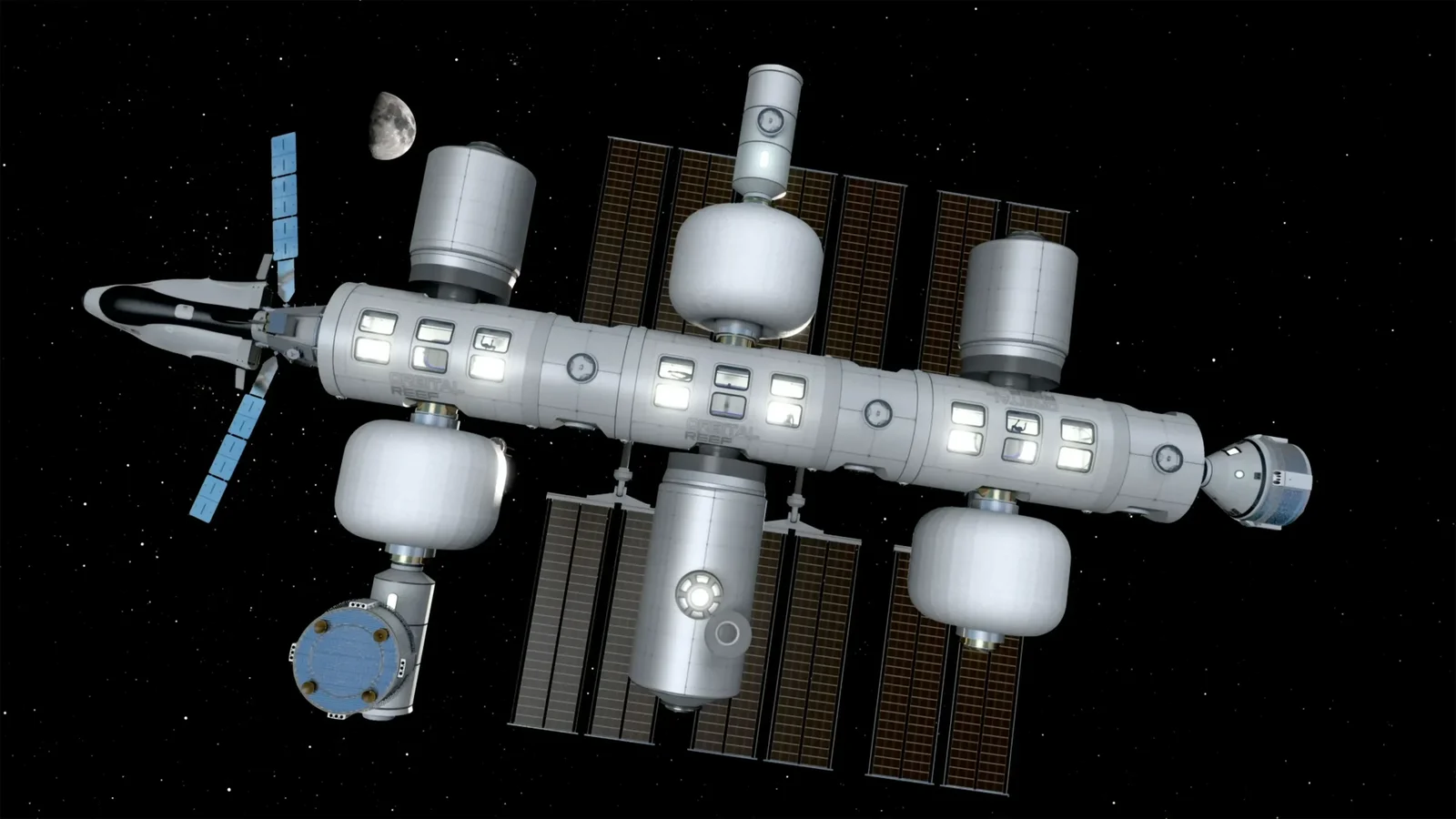
Blue Origin Is Walking Away From NASA's Space Station Race to Focus on the Moon
Blue Origin won't bid its Orbital Reef station in NASA's next commercial space station round, leaving fewer companies in line to replace the ISS as NASA warns its budget may only cover one station.
So basically: Blue Origin is backing out of NASA’s race to build the space station that replaces the International Space Station. Its station idea, Orbital Reef, won’t be entered in NASA’s next round. Jeff Bezos’ rocket company says it’s putting that money and those people toward the Moon instead.
What happened
NASA has a program called Commercial LEO Destinations, or CLD for short. The idea is simple. Instead of NASA owning the next space station, private companies build and run their own, and NASA rents space on them for its astronauts.
NASA is taking proposals for the next phase right now. They’re due December 8, and NASA expects to pick winners around April 2027.
Blue Origin CEO Dave Limp told employees on November 12 that the company won’t bid. In a statement, Blue Origin said, “As our role supporting NASA’s Artemis and Moon Base missions continues to grow, we’re focusing resources on capabilities that directly advance our lunar projects.”
It hasn’t said Orbital Reef is dead for good. But it’s clearly on the back burner.
What Orbital Reef was supposed to be
Orbital Reef was announced back in 2021 and pitched as a “mixed-use business park” in orbit. Blue Origin led it with partners including Sierra Space and Boeing. NASA gave the team a $130 million contract in the first phase that December.
Things got rocky after that. Reports in 2023 said Blue Origin and Sierra Space were each putting their bigger programs first. Blue Origin had its Moon lander. Sierra Space had its Dream Chaser spaceplane. Now, three years later, Blue Origin isn’t even bidding.
Blue Origin is going all in on the Moon
This isn’t the first thing Blue Origin has shelved for the Moon. In January, it paused its New Shepard tourist rocket for at least two years for the same reason.
Here’s what it’s working on instead:
- Blue Moon Mark 1, an uncrewed cargo lander, now aimed at early 2027
- Blue Moon Mark 2, a lander built to carry astronauts
- A $94 million NASA contract, plus a $140 million option, to deliver a nuclear powered rover to the Moon’s south pole
- A spot in NASA’s big Moon cargo delivery program
It also has problems at home. A New Glenn rocket exploded during testing in May at its only orbital launch pad in Florida, and its return to flight has slipped to January.
The bigger problem for NASA
Here’s the part that matters for the ISS. NASA wants to pick at least two stations in this round, so it isn’t stuck with just one company. But NASA officials said in March that its budget, roughly $1 billion to $1.5 billion over several years, “may only be sufficient to support one commercial space station.”
So the field is getting smaller at the same time the money is tight.
Who’s still in it? Starlab, led by Voyager Technologies with Airbus, is expected to bid. Axiom Space and Vast are building stations too. Vast plans to launch its small Haven-1 station in the first quarter of 2027.
The clock is real. The ISS is planned to retire around 2030. Government auditors have warned that a new station built on a normal NASA timeline might not be ready until around 2031. That could mean a gap where America has no place of its own to keep astronauts in orbit.
My take
I don’t blame Blue Origin. You can’t chase the Moon, a new rocket, a lander and a space station all at once and do them all well. But it’s a little sad, because Orbital Reef was one of the more exciting station ideas. Now it’s mostly up to Vast, Axiom and Starlab. December 8 will tell us who’s still serious, and whether NASA ends up with two stations or just crosses its fingers on one.
So basically — pass it on.
Daily Updates
Get new stories in your inbox
Near-future tech when it moves. Robots, space, EVs, AI. No spam.