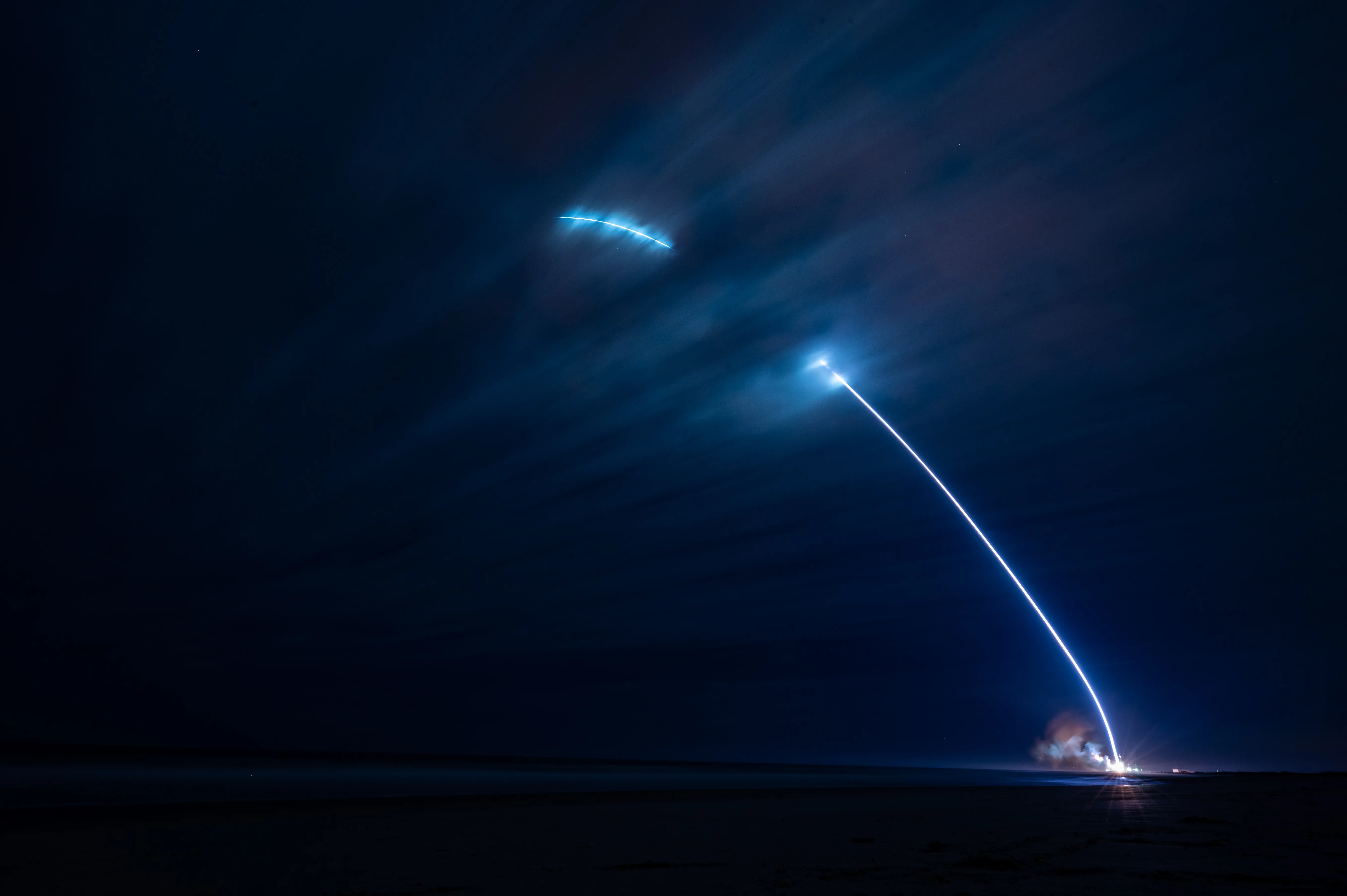
Blue Origin Is Building for 150 New Glenn Flights a Year in Florida
Blue Origin announced two more New Glenn pads, a 150-upper-stage factory, more landing ships, and a Space Force payload facility, aiming at multiple flights a week by decade's end.
So basically: Blue Origin just announced a huge Florida buildout aimed at eventually flying about 150 New Glenn rockets a year. More pads. A factory for upper stages. Extra landing ships. A new payload facility with the Space Force. Ian Richardson, Blue Origin’s SVP of operations, said the infrastructure is meant to support multiple flights per week by the end of the decade.
That is a wild target for a rocket that has only reached orbit twice.
What they are adding
Per Ars Technica’s Oct. 16 report on Blue Origin’s update:
- Two more New Glenn launch pads, on top of two already under construction at Cape Canaveral
- A new manufacturing facility sized for up to 150 upper stages a year for a larger New Glenn variant
- Two more landing ships to catch and return the first stage (they currently have one, Jacklyn)
- A new customer integration facility with the U.S. Space Force, with four payload bays so multiple missions can process at once
The new pads are supposed to copy the design path they are already using on LC-36B. Fast copy-paste construction, not a brand new invention every time.
The money and the footprint
Blue Origin says it has put about $3 billion into Florida facilities so far. More than 5,000 employees in the state. About 500 suppliers. The manufacturing and ops footprint has more than doubled in a couple of years, across 20-plus sites in Brevard and Orange Counties.
Richardson’s line is that Blue Origin is the only company manufacturing, launching, and refurbishing rockets on the Space Coast, and the largest employer doing that mix. SpaceX still launches way more from Florida. Blue Origin is arguing about vertical integration on the coast, not current flight count.
The awkward part: only two orbital flights
New Glenn has flown to orbit twice. In May, a BE-4 problem destroyed a vehicle and wrecked LC-36A. Blue Origin has been racing to rebuild 36A for a return to flight. Late 2026 looks unlikely. Early 2027 is the more realistic window, according to Ars.
So this announcement is not “we already fly every week.” It is “we are pouring concrete and factories for the cadence we want later.”
Why the bigger rocket matters
LC-36B is being built for a larger 9x4 New Glenn: nine first-stage engines instead of the current 7x2. The 9x4 is aimed at about 70 tons to low Earth orbit and more than 20 tons to trans-lunar injection. That class of lift is what you need if you are serious about NASA Artemis lander logistics. Debut could be around 2028 if development holds.
The new pads announced Friday are expected to follow that same 9x4-friendly approach.
The market hole Blue Origin wants
SpaceX is expected to pull Falcon commercial capacity after about 2028 as Starship takes more of the load. Satellite customers are already hunting for rides. If New Glenn can fly reliably and often, Blue Origin walks into a real opening. Jeff Bezos has been spending like he means it. This Florida package is more of that.
Earlier this month, Blue Origin asked the FAA to raise one pad from 12 launches a year to 50. Today’s story is bigger: multi-pad, multi-ship, factory-rate infrastructure pointed at 150 a year and weekly flights by decade’s end.
What to watch
- Return to flight timing after the May failure
- How fast LC-36B and the two new pads actually appear
- Whether 150 upper stages a year is capacity on paper or a real build rate
- Who books those four payload bays once cadence exists
My take
This is Blue Origin saying the quiet part out loud. They want New Glenn to be a factory product, not a rare event.
I respect the spend. $3B and 5,000 Florida jobs is serious. But cadence is still the missing piece. Two orbital flights and a blown pad do not equal 150 a year. Build the pads. Fly the rocket. Then the 150 number starts to mean something.
So basically — pass it on.
Daily Updates
Get new stories in your inbox
Near-future tech when it moves. Robots, space, EVs, AI. No spam.