Self Driving Excavators Are Already Doing Paid Work on Real Job Sites, and the Startup Behind Them Just Raised $600 Million
Bedrock Robotics, a two year old San Francisco startup run by former Waymo engineers, raised a $600 million Series C at a $4.1 billion valuation on Oct. 26, 2026. Its kit turns regular excavators into fully autonomous machines, and new customers include a site development company in Virginia.
So basically: A startup called Bedrock Robotics makes a kit that turns a regular excavator into one that digs all by itself, with nobody in the seat. Those machines have been doing paid work on real construction sites since August. On Oct. 26, the company announced it raised $600 million, which values it at $4.1 billion. The company is only two years old.
What Bedrock actually does
Bedrock doesn’t build its own excavators. It takes the machines contractors already own and adds its own sensors, computers and software to them. Once the kit is on, the excavator can dig, load and move dirt on its own while the regular crew works around it.
The idea is that a contractor doesn’t have to buy a whole new fleet. They keep the yellow iron they already paid for, and Bedrock makes it smarter.
The company was founded in 2024 by people who came out of Waymo, the Google company that runs driverless taxis. The CEO, Boris Sofman, used to lead Waymo’s self driving truck program. Before that he co-founded Anki, the company that made the little Cozmo toy robot a lot of kids had a few years ago.
So these are people who already spent years teaching cars to drive themselves. Now they’re teaching excavators to dig.
Where these things are working right now
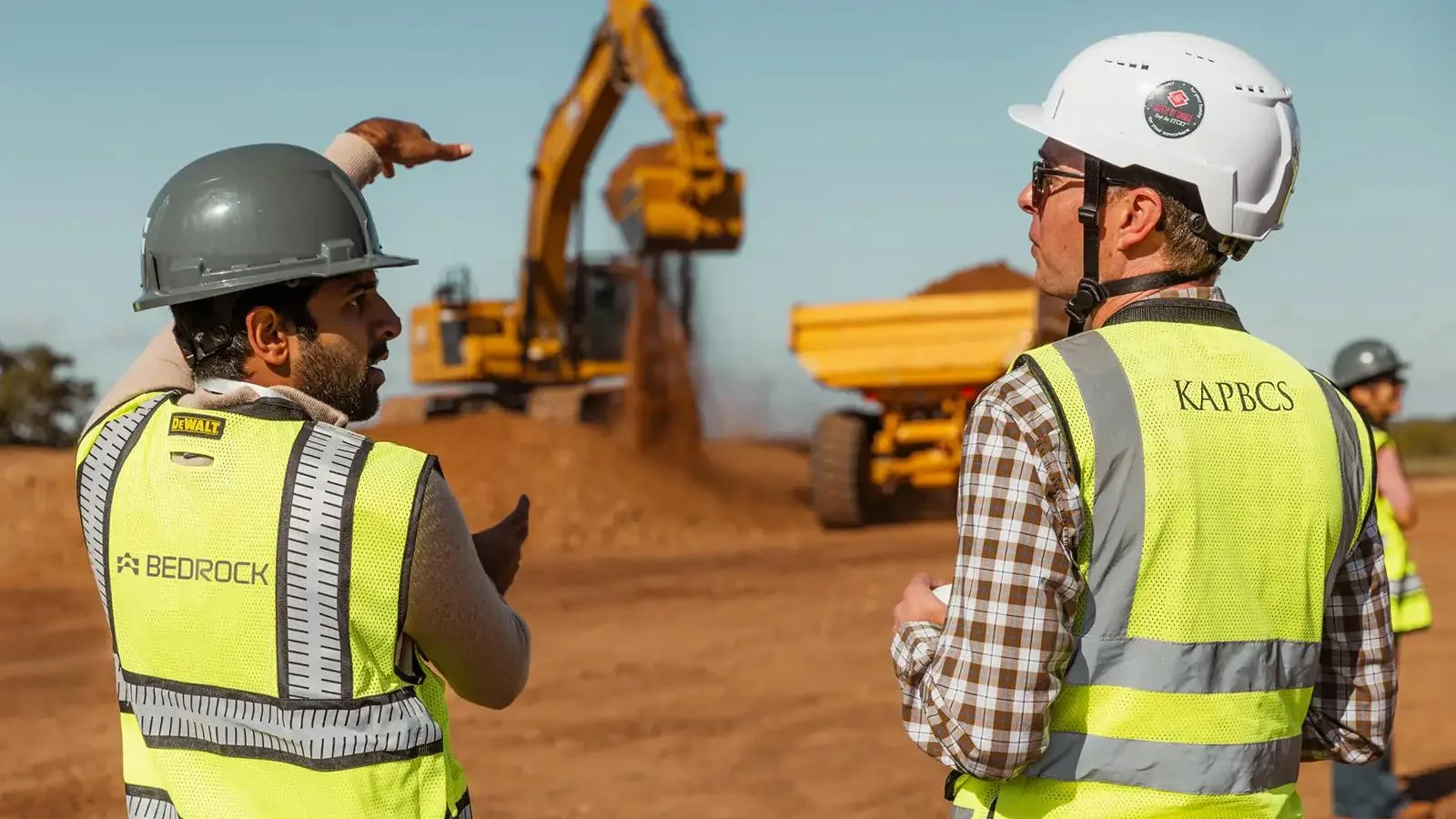
This isn’t a demo in a parking lot. Bedrock says its excavators are doing real work at a water treatment plant in Nevada, on dirt work for a company called Champion Site Prep in Texas, and on a big project with Zachry Construction that involves moving about 1.2 million cubic yards of dirt. That’s enough dirt to fill a football stadium a few times over.
The newest partner is Haydon, a big Arizona contractor owned by its own employees. It’s starting on a remote site in Texas and plans to use the machines on projects like factories, water plants and data centers. Haydon also wants to test trench digging and bigger machines.
Bedrock also listed a bunch of new customers in other states, and one of them is B&S Site Development in Virginia. Others are in Minnesota, Florida, Colorado, Missouri, Georgia and Arkansas. The company says its number of customers has more than doubled since 2025.
Why anybody needs a robot excavator
It comes down to people. Bedrock says it takes five years or more to get really good at running an excavator. Meanwhile, a lot of the guys who know how are getting close to retirement. A national builders group estimates more than 40% of construction workers will retire in the next five years.
Bedrock’s own numbers say 87% of construction companies have open spots for hourly trade jobs, and most of them say those spots are just as hard or harder to fill than last year.
So the pitch isn’t “fire your operator.” It’s “you can’t find another operator, so let one experienced guy keep an eye on a machine that runs itself while he does something else.” Katie Haydon, the CEO of Haydon, said the biggest win for her company is a safer job site, and that it could help her crews get home to their families even during the busiest stretches.
Who’s paying for it
The $600 million round was co-led by CapitalG, which is Google parent Alphabet’s growth fund, and Emergence Capital. Nvidia is also an investor. All together, Bedrock has now raised close to $1 billion.
The money is going toward putting more machines on more job sites and hiring the field crews that keep them running. They also brought on a new operations boss from Amazon and Uber, and a lawyer who used to handle the legal side of Uber’s self driving business.
My take
I love that one of these is going to a company in Virginia. When I think about robots, I usually picture something in a factory in China or a fancy lab in California. Not a dirt site down the road. But road work and site prep around here takes forever, and I see the same few crews stretched across half the county. If one good operator can watch over a couple of machines that dig on their own, that’s more jobs getting finished, not fewer people working. I just hope the guys teaching these machines get paid well for it, because they’re the ones who know how it’s really done.
So basically — pass it on.
Daily Updates
Get new stories in your inbox
Near-future tech when it moves. Robots, space, EVs, AI. No spam.