Five Pilotless Electric Aircraft Just Flew in Formation for 47 Minutes, and One of Them Weighs 5 Tons
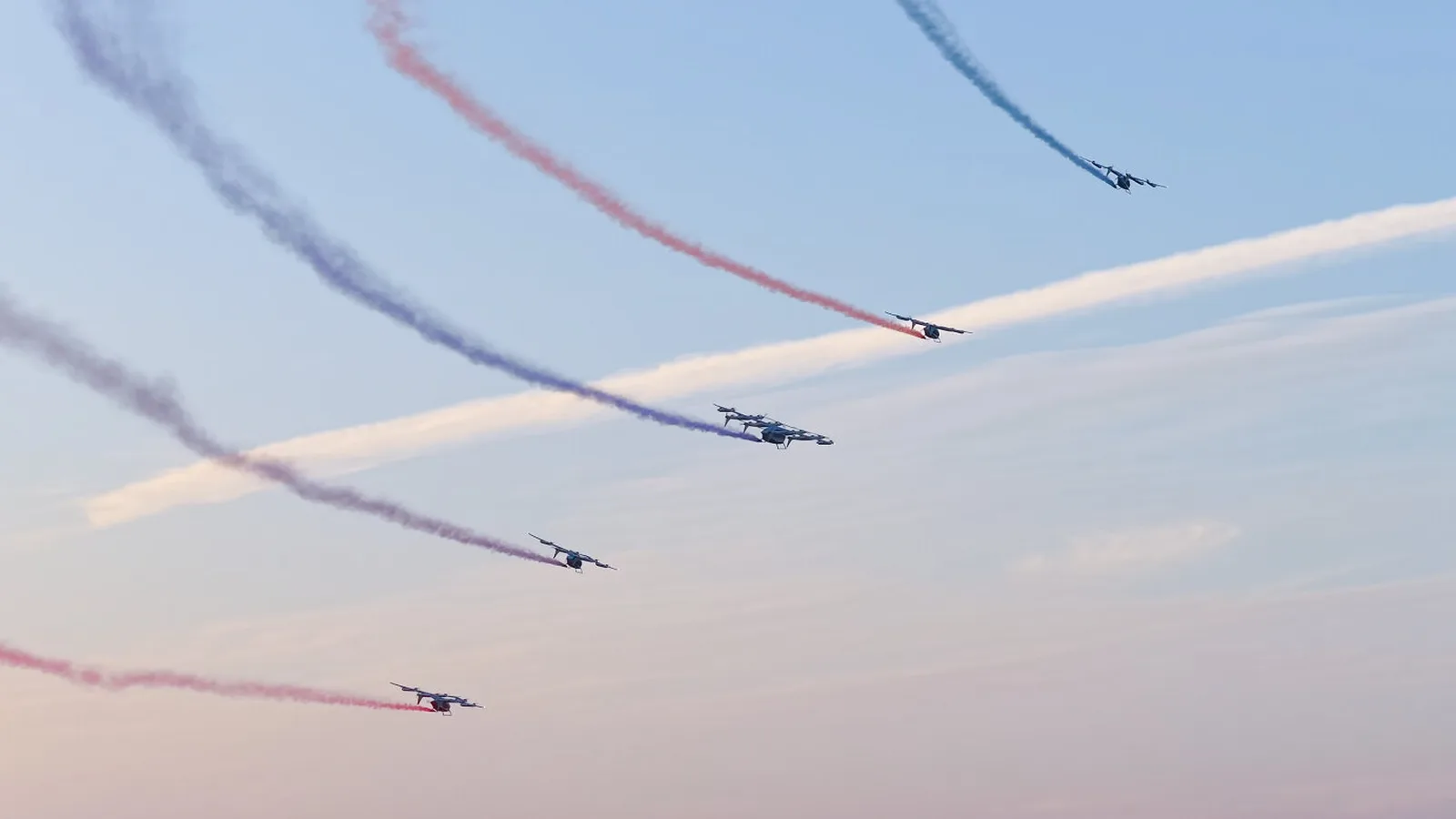
AutoFlight flew five eVTOL aircraft in formation over Kunshan, China on Oct. 31 and Nov. 1, 2026. The lead aircraft is the company's 5-ton V5000 Matrix, the flight lasted 47 minutes, covered more than 133 km, and nobody was flying any of them by hand.
So basically: A Chinese company called AutoFlight just flew five electric vertical takeoff aircraft together in formation, like an air show team, except nobody was flying them. The whole formation ran itself for 47 minutes and covered more than 133 kilometers, which is about 83 miles. And the one leading the pack weighs around 5 tons.
AutoFlight says it’s the first time in the world five eVTOLs have flown in formation like this.
What actually happened
The flights took place on Oct. 31 and Nov. 1, 2026, at AutoFlight’s Bailian Lake Flight Test Base in Kunshan, China, which is a city just west of Shanghai. The company announced it on Nov. 3.
Here’s the lineup that went up together:
- One V5000 Matrix, a 5-ton eVTOL that AutoFlight calls the world’s first and largest of its size
- Four 2-ton aircraft from the company’s CarryAll family
- Those four were a mix of the V2000CG cargo version and the V2000CGF firefighting version
So that’s three different aircraft models in two weight classes, all flying together. The lead V5000 is the one that covered the 133 plus kilometers.
AutoFlight says the entire flight was autonomous with no manual intervention. The photo at the top shows them in the air trailing colored smoke, which is a pretty wild thing to see when you remember there’s no pilot in any of them.
The windy day
The part that caught my attention is the second day. AutoFlight says there were strong winds on Nov. 1, and the formation still kept stable flight and safe spacing, both side to side and up and down.
That matters because keeping a big aircraft and a much smaller one in formation is hard. They don’t react to wind the same way. A 5-ton machine and a 2-ton machine get pushed around differently, so the software has to keep adjusting each one on its own while also keeping them all in the right spots. The company said coordinating aircraft of different sizes takes precise route planning, flight control, communication and safety management.
Who watched
This wasn’t a quiet test in an empty field. AutoFlight invited a group from the Stanford Executive Program at Stanford’s business school, people from the international eVTOL industry, and its own customers and partners. They watched from the lakeside.
The guests also got to visit Sunship, which AutoFlight calls a water based green vertiport on Dianshan Lake. Basically a floating landing pad for these aircraft.
This isn’t AutoFlight’s first formation
Back in May 2026, AutoFlight flew a three aircraft formation. So in about six months it went from three to five, and added a much bigger aircraft to the mix.
The CarryAll is also not some prototype. According to AeroTime, the V2000CG was the first ton class eVTOL to get all three airworthiness certificates from China’s aviation regulator: a type certificate, a production certificate and an airworthiness certificate. That’s the full set you need to build and fly them for real work.
Why fly them in groups at all
AutoFlight says this is laying the groundwork for future low altitude transport networks that connect long haul, regional and last mile routes.
Think about how that could work. A big 5-ton aircraft carries a load over the long stretch, and smaller ones handle shorter hops, all moving together without each one needing its own pilot. For cargo, that could mean one operator watching a whole group instead of one person per aircraft. For firefighting, it could mean several aircraft dropping water on the same fire in a coordinated pattern.
My take
I’ve seen a lot of flying taxi demos where one aircraft hovers for a couple minutes and lands. This is different. Five of them, three models, two weight classes, almost 50 minutes, real wind, and nobody holding a stick. China is moving fast on drone style aircraft for cargo and emergencies, and this is the kind of test that shows they’re thinking about fleets, not just single machines. If the skies are going to have a lot of these someday, they’re going to have to fly together safely, and this is a big early step in that direction.
So basically — pass it on.
Daily Updates
Get new stories in your inbox
Near-future tech when it moves. Robots, space, EVs, AI. No spam.