Astrolab Wants to Sell Power and Wi-Fi on the Moon, Starting With 2 kW Solar Nodes in 2028
On Nov. 4, 2026, Astrolab unveiled LUMIS, a lunar power and communications node, and LUNAR OS, a suite that pairs it with FLEX rovers. Demo nodes target 2 kW, future ones 20 kW, with a first deployment planned for 2028 on Starship.
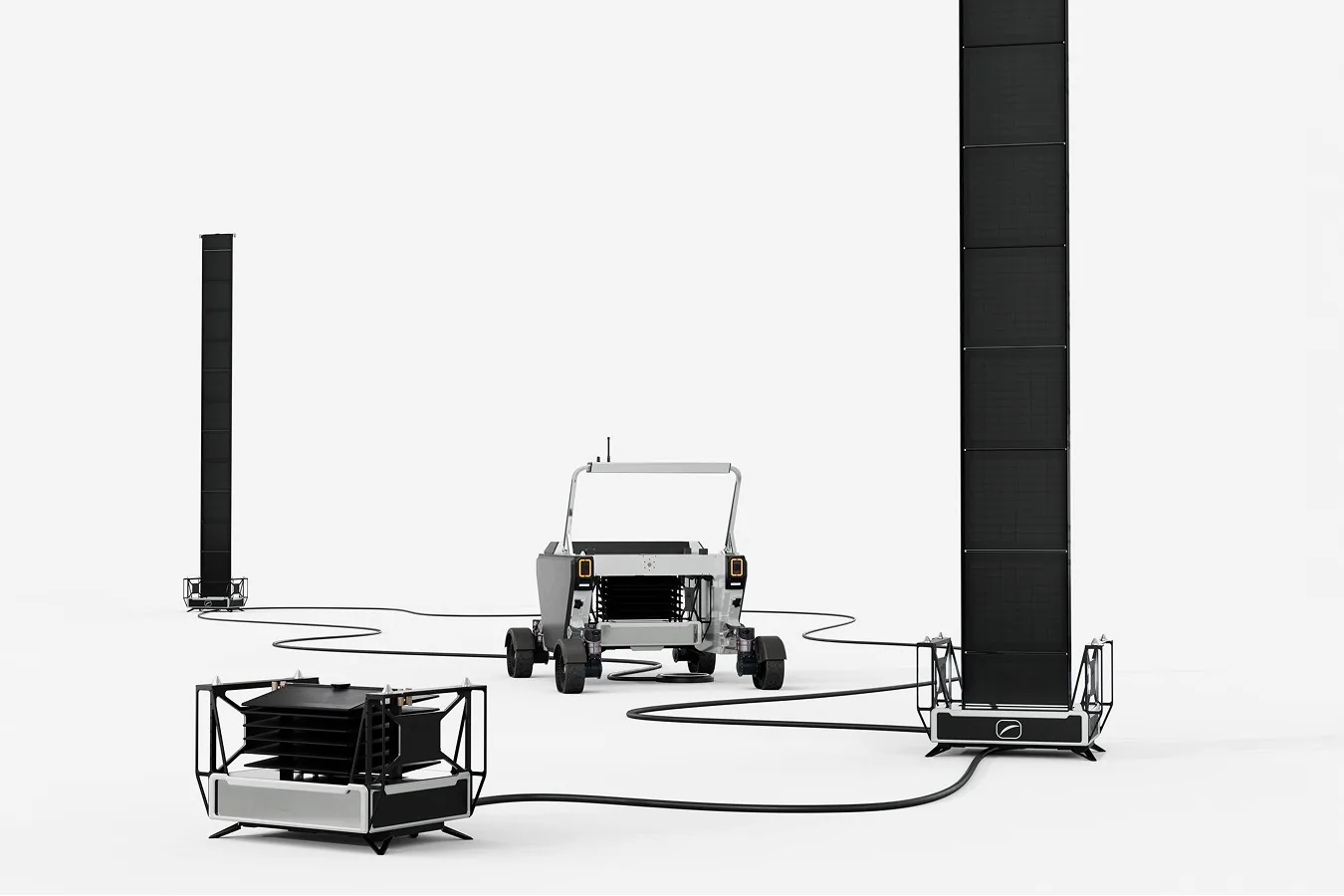
So basically: A California company called Astrolab wants to sell power, Wi-Fi, and data on the Moon the way a utility sells electricity on Earth. On Nov. 4, 2026, it unveiled a boxy solar powered station called LUMIS and a bigger product suite it calls LUNAR OS.
What LUMIS is
LUMIS stands for Lunar Utility Module for Industrial Services. Think of it as a portable power and communications tower for the lunar surface.
Early demo nodes are designed to make about 2 kW of power. Later ones are aimed at 20 kW each. Hook several together after a cargo lander drops them off, and Astrolab says a linked grid could deliver more than 100 kW before anyone has to fly a nuclear reactor up there.
Each node is planned with a vertical solar array, batteries, radios, wireless power transfer, and onboard computing. Astrolab says a node should keep running for more than 400 hours on internal reserves while still supporting gear plugged into it.
Why a rover moves them
The clever part is not the solar panels. It is the delivery plan.
Landing sites on the Moon have to be safe for a lander: gentle slopes, no giant rocks. The best places for solar power and Earth contact are often somewhere else. Near the south pole, moving a station just 50 meters can mean hundreds of extra hours in the dark, or cut Earth visibility roughly in half.
Astrolab’s FLEX rover is built to haul cargo tens of kilometers after landing. One rover can drag several LUMIS nodes to a ridge with good sunlight and a clear view of Earth, then link them. That way you do not put wheels and motors on every power box.
Who would buy this
Astrolab wants customers to pay for access, not build their own mini power plant. Smaller missions would share a node. Bigger ones could lease a dedicated setup.
Possible jobs include charging visiting rovers, sending science data home, powering gear that digs up local resources, and running local Wi-Fi and 5G for robots and habitats. Nodes on high ground like Malapert Massif or Mons Mouton could talk to Earth almost nonstop and relay signals to the Shackleton to de Gerlache ridge more than 100 kilometers away.
The timeline
Astrolab is targeting a first LUMIS deployment in 2028 on its commercial FLEX mission aboard SpaceX’s Starship. Before that, it is preparing a smaller rover called FLIP for a NASA Moon Base flight later this year on Voyager Technologies’ Griffin-1 lander.
The company was also picked to develop a crewed lunar rover for NASA’s Artemis program. In 2027 it plans to move from Hawthorne, California, to a larger Torrance facility about four times the size of its current shop.
How this fits Artemis and commercial landers
NASA and commercial landers are packing more robots and habitats into the south pole region. Every one of those machines needs power through the long lunar night and a way to talk home when a crater rim blocks Earth.
Astrolab is betting that shared utility nodes beat every mission flying its own overbuilt solar farm. That is the same logic that made shared cell towers beat every phone company building its own mast on every hill. The company also says full scale models of the rovers and LUMIS were on display at Kennedy Space Center during the UP.SUMMIT public showcase on Nov. 7 and 8, 2026, which is a way to put hardware in front of partners instead of only PDFs.
The risk is obvious. Lunar utilities only pay off if enough customers show up on the surface in the late 2020s. If landings slip, a node sitting in a California warehouse does not earn a dime.
My take
Moon missions keep talking about staying, not just visiting. Staying means power and radios that do not die every time the Sun goes down or Earth dips behind a hill.
LUMIS is a smart product pitch: sell the boring utilities so science teams do not have to invent them from scratch. The 2028 Starship ride is still a plan, not a landing. If they actually park a couple of these nodes on a ridge and keep a rover charged for weeks, that is when this stops being a slide deck and starts being infrastructure.
So basically — pass it on.
Daily Updates
Get new stories in your inbox
Near-future tech when it moves. Robots, space, EVs, AI. No spam.