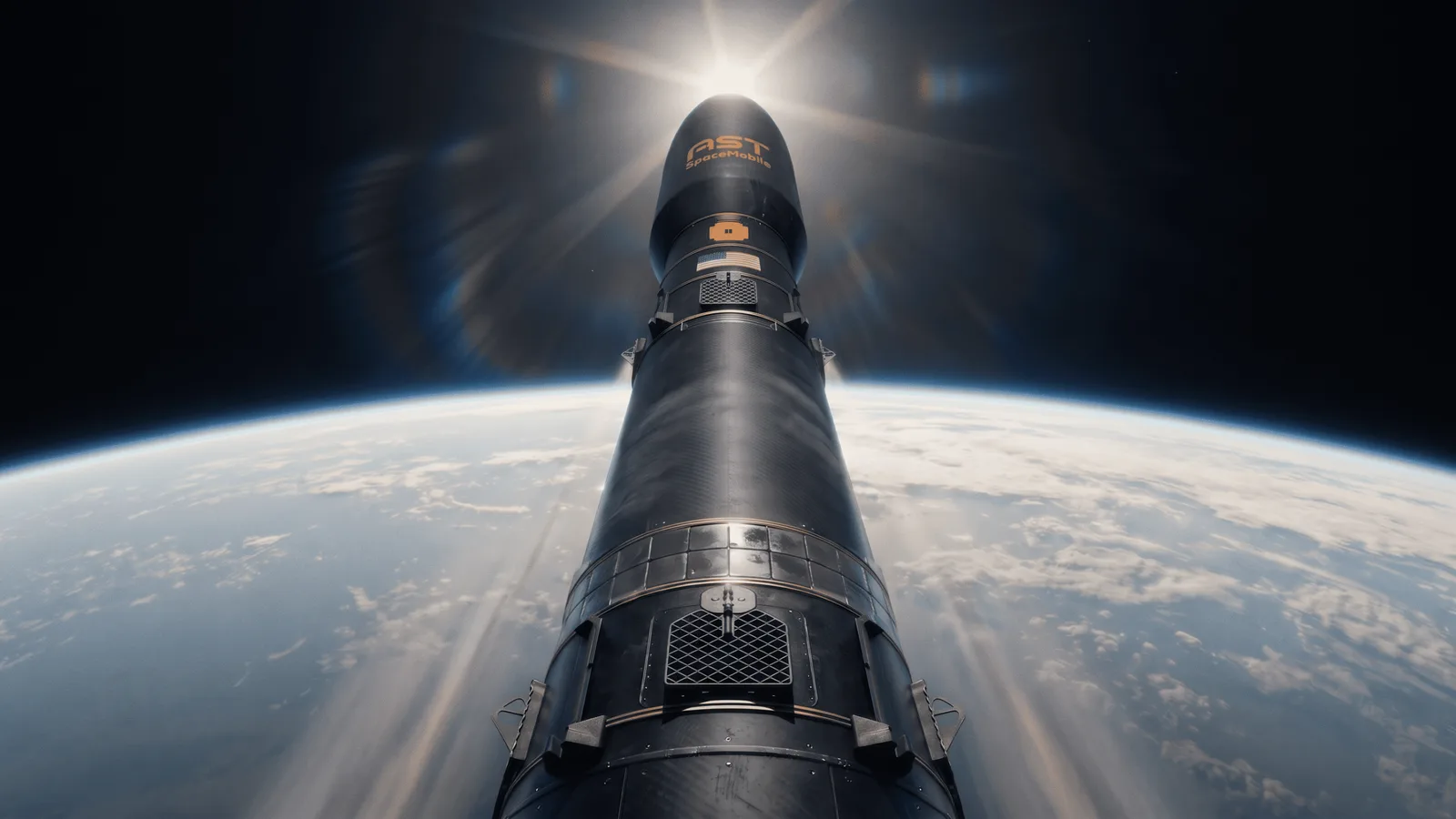
AST SpaceMobile Is Building Its Own 20 Ton Rocket, and It's Paying Firefly $1.3 Billion for the Engines
AST SpaceMobile announced Blacklift, a reusable rocket meant to launch five BlueBird phone satellites at a time starting in 2028. Firefly Aerospace will supply 36 engines and license the design in a $1.3 billion deal.
So basically: AST SpaceMobile, the Texas company putting giant cell towers in orbit so regular phones can get signal from space, now wants its own rocket. It’s called Blacklift, it’s rated at about 20 tons, and AST is paying Firefly Aerospace $1.3 billion for the engines and the right to build more of them. AST says it wants Blacklift flying starting in 2028.
What Blacklift is for
AST builds big satellites called BlueBirds. Each one unfolds a huge flat antenna so it can talk straight to normal smartphones, no special dish needed. Right now AST pays other companies to launch them.
Blacklift is built around those satellites. AST says it will carry up to five BlueBirds per launch to the orbits its network needs. The company says the rocket is designed for reusability and for “simple, mission specific, repetitive launches” to low Earth orbit.
AST was clear that Blacklift will complement its current launch partners, not replace them. It’s basically the SpaceX Starlink playbook. SpaceX mostly flies Falcon 9 to launch its own Starlink satellites. AST wants that same control over when its satellites go up.
The engine deal, in plain numbers
Here’s how the $1.3 billion breaks down, based on the companies’ announcements:
- $800 million up front, half in cash and half in AST Class A stock
- $250 million for 36 engines
- $250 million over three years for engineering services
Firefly says the order covers 27 Miranda engines and 9 Vira engines, the vacuum version, for AST’s first three rockets. Do the math and that looks like 9 engines on each first stage and 3 on each upper stage. Firefly is also giving AST a license to manufacture the engines itself later.
AST says the engines have finished more than 150 hot fire tests, including full power runs at 110% of rated thrust. It calls that the equivalent of more than 20 full first stage flights.
The catch
Neither engine has flown to orbit yet. Miranda was developed for Firefly’s own Eclipse rocket, and Firefly’s current public target for Eclipse’s first launch is 2027.
There’s also the schedule. AST is going from a rendering to a planned first launch in about two years. Payload Space found that new rockets have historically taken about six years from the start of development to a successful first flight. AST also hasn’t shared the rocket’s height, tank sizes, or where it will launch from.
Some answers might come soon. AST has its Q3 earnings call on Monday, Nov. 9, and an “unveiling event” in New York City on Thursday, Nov. 12.
Why a phone company wants a rocket
Launch slots are the bottleneck for anyone building a big constellation. If your satellites sit in a warehouse waiting for a ride, your network doesn’t grow, and your competitors keep moving. Starlink already offers direct to cell texting through T-Mobile, and SpaceX controls its own launches. AST is trying to close that gap.
AST also says Blacklift opens a path beyond cell service, into things like radar, sensing, and IoT devices. That’s a lot of promises stacked on a rocket that doesn’t exist yet.
My take
I like the ambition here. A company that builds satellites in Texas deciding it’s tired of waiting in line for rides is the same logic that pushed SpaceX to launch its own Starlink satellites.
But 2028 is a really aggressive date for a brand new 20 ton rocket using engines that haven’t been to orbit. I’d treat this as a long term bet, not a near term launch schedule. The real thing to watch is the Nov. 12 event. If AST shows hardware, a launch site, and a test plan, I’ll take it a lot more seriously. If it’s mostly renderings, this is a 2030 rocket wearing a 2028 sticker.
So basically — pass it on.
Daily Updates
Get new stories in your inbox
Near-future tech when it moves. Robots, space, EVs, AI. No spam.