This French Aircraft Takes Off Like a Helicopter, Flies Like a Plane and Runs on Batteries and Jet Fuel
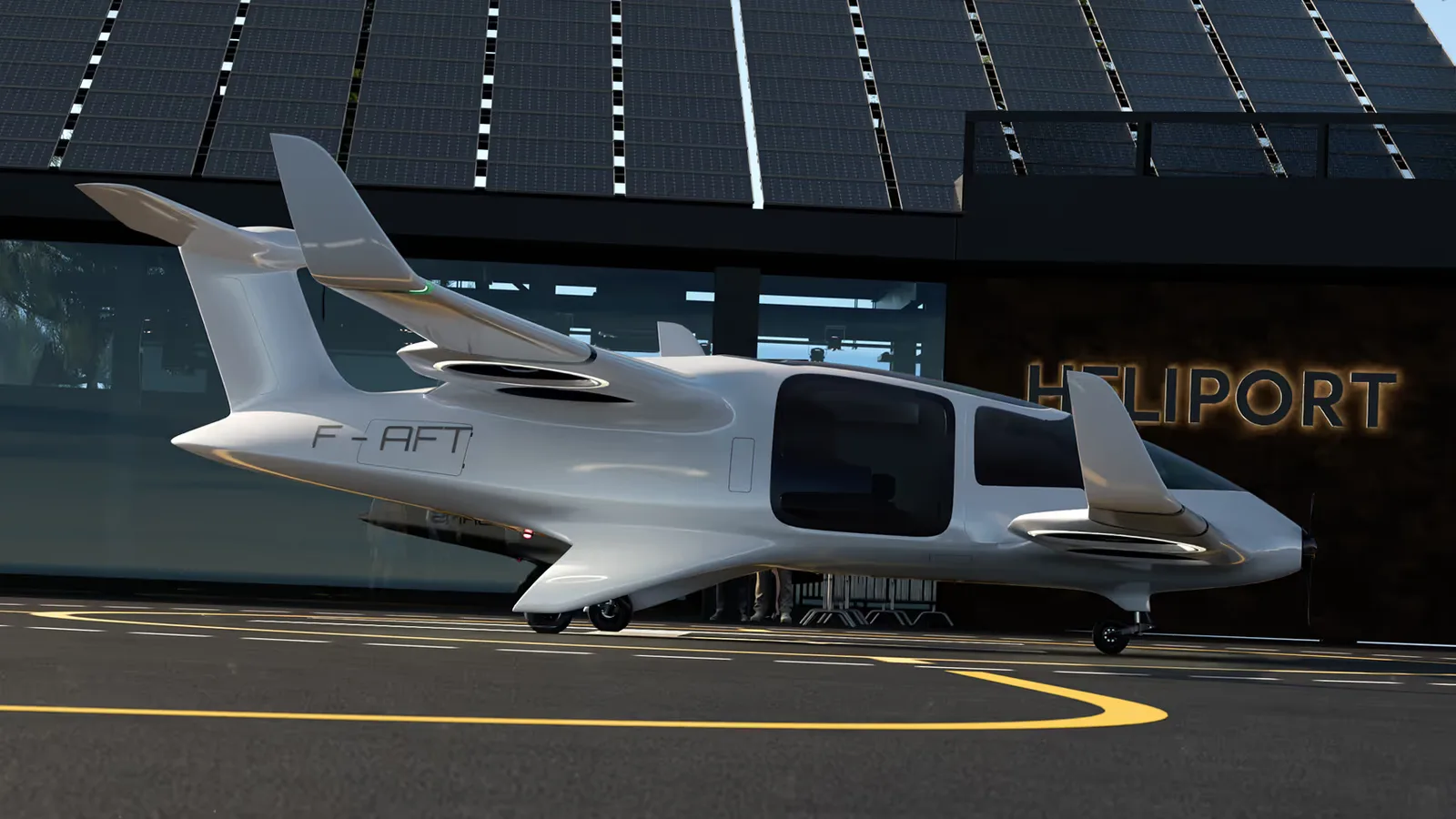
Toulouse startup Ascendance unveiled the full-scale prototype of ATEA, a hybrid-electric VTOL with eight rotors built into its wings, on Nov. 19, 2026. It seats a pilot and four passengers, has a planned range of up to 400 km, and should fly for the first time around the end of the first quarter of 2027.
So basically: A French startup called Ascendance just rolled out the full size prototype of ATEA, an aircraft that takes off straight up like a helicopter and then flies like a plane. It has eight rotors built into its wings, and it’s a hybrid. Batteries do the heavy lifting on takeoff and landing, and a fuel powered generator takes over in cruise. It seats a pilot and four passengers, and the company says it’ll fly for the first time around the end of March 2027.
Who Ascendance is
Ascendance is based near Toulouse, which is basically the capital of European aviation since that’s where Airbus is. It unveiled ATEA on Nov. 19 at the Muret-Lherm airfield, right by its headquarters.
The company says it took eight years of work, about €60 million and 140 patents to get here. That’s not a lot of money for an aircraft program. CEO Jean-Christophe Lambert admitted it’s small next to what some U.S. and Chinese air taxi companies have raised. The airframe itself was built by Duqueine Group in Lyon and finished back in February.
How it actually flies
This is the cool part. Most air taxis you hear about use big rotors on booms or tilting propellers. ATEA hides its eight lift rotors inside the wings. Those lift it straight up. Then two propellers, one in the nose and one at the back of the tail, push it forward. Once it’s going fast enough, the wings do the lifting like a normal plane.
The power system is called STERNA, and Ascendance built it in house. Takeoff and landing need a ton of power, so that’s when the batteries kick in. In cruise, generators burning regular jet fuel or sustainable aviation fuel keep things running. That’s how it gets real range without carrying a massive battery.
The electric motor comes from Safran, the big French engine maker. By February, the STERNA system had more than 500 hours of bench testing over four years.
The numbers
- Seats: one pilot and four passengers
- Range: up to 400 km (about 249 miles), including a 30 minute reserve
- Usable range: about 350 km (217 miles)
- Letters of intent: more than 630, according to the company
Ascendance pitches it as a quieter alternative to helicopters. Think medical flights, moving people between cities, cargo and military work.
When it flies
Not tomorrow. Lambert laid out the plan to AFP. First, four to five months of ground tests to check every system. Then slow taxi runs, then a flight permit, then high speed taxi runs, and then the first flight, which he put around the end of the first quarter of 2027. After that comes 18 to 24 months of flight testing before anything gets built for customers. The company’s website still targets certification in 2029.
It’s worth knowing the schedule has slipped before. When the design came out in 2021, the plan was to start testing a full size prototype in 2023.
Bigger than one aircraft
Ascendance is also selling the hybrid system itself. In July it signed a letter of intent with ATR, the regional airliner maker, to study hybrid setups for future regional planes. In November it signed a deal with Naval Group on power systems for autonomous naval vessels.
My take
I like this one because it’s not trying to be a flying Uber in a city that isn’t ready for it. It’s going after what helicopters do today, which is a real market with real customers. The hybrid part makes sense to me too. Batteries alone still can’t carry five people very far, and this sidesteps that problem. The catch is money. €60 million is tiny for a new aircraft, and the timeline has slipped before. If it actually flies in early 2027, that’ll say a lot. If they raise a big round soon after, this could be one to keep an eye on.
So basically — pass it on.
Daily Updates
Get new stories in your inbox
Near-future tech when it moves. Robots, space, EVs, AI. No spam.