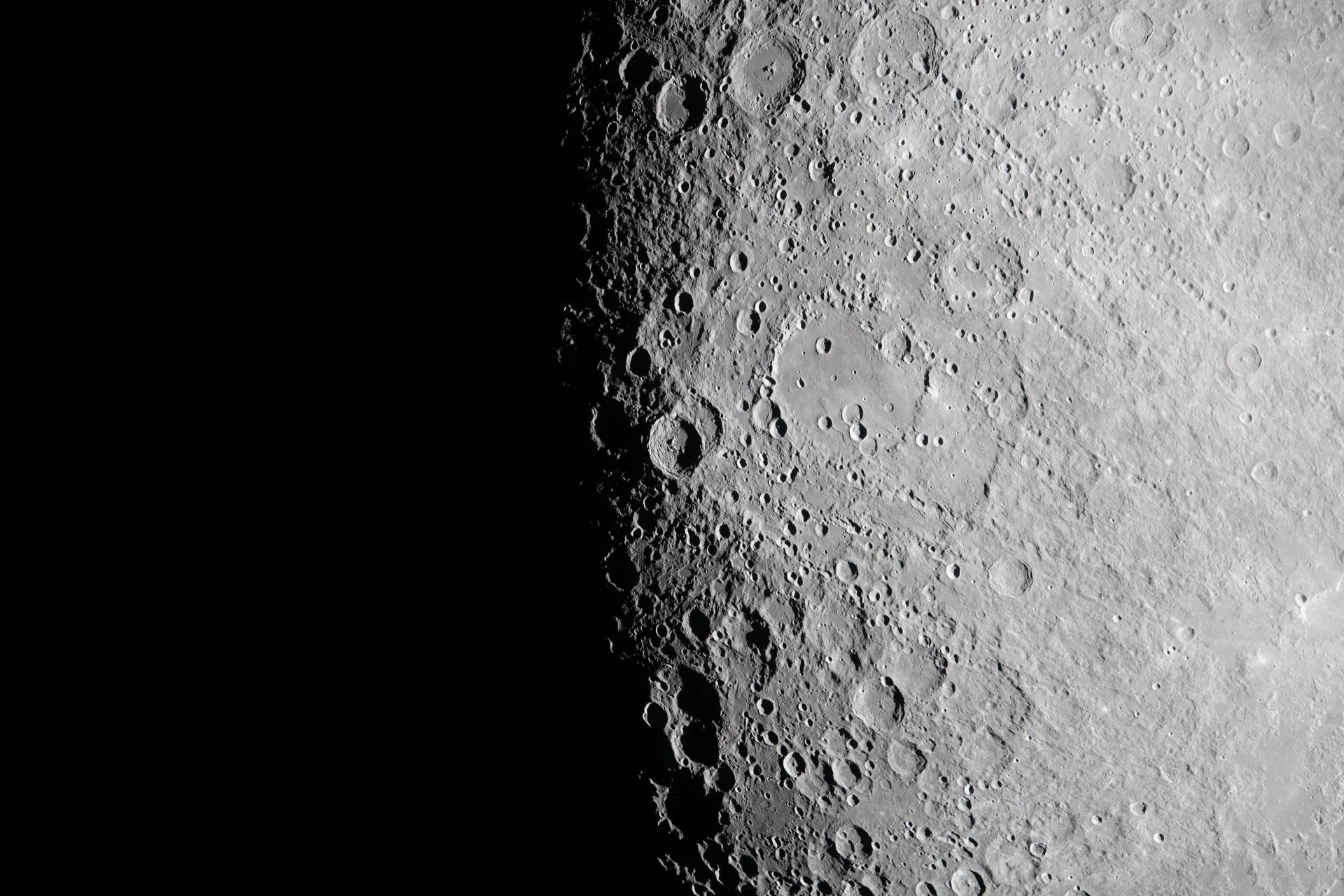
Artemis II Astronauts Watched Rocks Hit the Moon From 46,000 Miles Away
NASA just dumped more than 800 GB of Artemis II data online, with 11,000+ photos and videos and 8.5 hours of crew audio. The headline: the crew saw five tiny impact flashes on the far side of the Moon, likely the faintest ever seen with the naked eye.
So basically: NASA just put everything the Artemis II crew saw around the Moon online for free. More than 800 GB of it. And buried in there is something nobody expected. Four astronauts, sitting in a capsule 46,000 miles from the Moon, watched rocks smash into it with their own eyes.
What NASA released
The Artemis II crew flew around the Moon back in April. On Oct. 7, NASA uploaded the full lunar science haul to its public Planetary Data System archive.
Here is what is in the pile:
- 11,000+ full resolution photos and videos from the crew’s handheld cameras and Orion’s cameras
- 8.5 hours of audio of the crew describing the Moon in real time
- Crew annotated images, with handwritten notes they made on tablets during the flyby
- A 130 page Preliminary Lunar Science Report, plus two more reports on how the science was planned and run
NASA says it is the first planetary science dataset captured mostly by humans in more than half a century. The last time people did this was Apollo.
Anyone can download it. You do not need to be a scientist.
The flashes
This is the part that got me.
Before the flight, scientists asked the crew to keep an eye out for impact flashes. Those are tiny bursts of light when a space rock hits the Moon. There is no air up there, so nothing burns up on the way down. Rocks just slam straight into the ground.
The crew saw five of them.
NASA says some scientists were “astonished” when the reports came in. The team ruled out cosmic rays and reflections off the spacecraft before confirming the sightings.
A few details that make this wild:
- The rocks were probably no bigger than a couple of inches wide
- They were moving thousands of miles per hour
- Apollo crews saw flashes from lunar orbit, but NASA says the Artemis crew likely caught the faintest ever seen with the unaided eye
It happened during a planned loss of radio contact behind the far side. So nobody in Houston heard it live. One audio clip has an astronaut reacting with “Dude! No way!” Another describes a flash as “just like a ‘bloop!‘”
Why it matters: knowing how often small rocks hit the Moon helps NASA figure out the risk to future Moon bases.
A 54 minute eclipse
The reason they could see the flashes at all is a once in a lifetime eclipse.
From Orion, the Moon looked huge and barely moved. So it blocked the Sun for 54 minutes. On Earth, a total eclipse lasts only a few minutes.
With the Sun hidden, the crew could see:
- Faint impact flashes
- Mars and Saturn
- The Sun’s outer atmosphere, the corona, with a “pulsating” streamer shooting off it
- A soft glow around the Moon from sunlight bouncing off space dust
The Moon is not gray
The other surprise is color.
Christina Koch called one area near the Aristarchus Plateau “a jaundiced cheek of the Moon.” Victor Glover reported green and brown streaks. Over the giant Orientale Basin, Koch described “almost swamp-like colors.”
The report says those hues could come from orange glass beads rich in titanium and green ones rich in magnesium. Apollo 15 and 17 brought similar beads home. Browns point to different levels of iron.
At closest approach the crew was 4,067 miles above the surface. They spent about seven hours taking turns at the windows.
My take
People love to say robots and cameras can do all the exploring now. This data pushes back. A camera does not get excited and say “Dude! No way!” because it noticed a two inch rock hitting the Moon from 46,000 miles out. People did. And that is exactly the kind of thing future Moon base planners need to know. Also, NASA handing out 11,000 photos for free is the best deal in space right now. Go look at them.
So basically — pass it on.
Daily Updates
Get new stories in your inbox
Near-future tech when it moves. Robots, space, EVs, AI. No spam.