XPeng's Flying Car Company Just Flew Its Bigger Aircraft Like an Airplane for the First Time
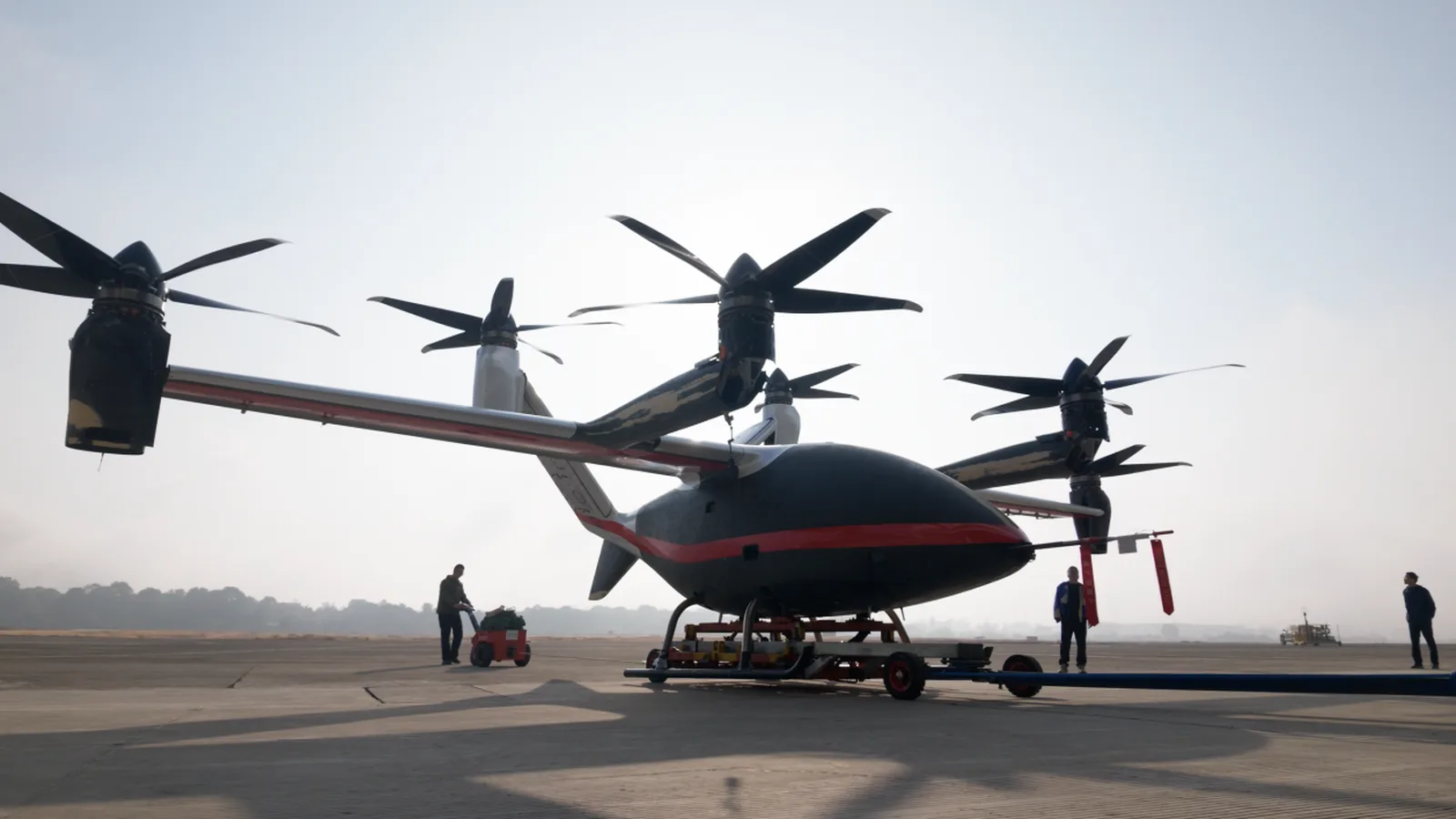
Aridge, the flying car company in XPeng's group, says its full-scale A868 tiltrotor completed a full transition flight, tilting all its rotors from hover to wing-borne cruise and back. The hybrid-electric A868 targets about 500 km of range at about 360 km/h.
So basically: Aridge, the flying car company that’s part of China’s XPeng group, says its full-scale A868 aircraft just pulled off a full tiltrotor transition flight. That means it took off straight up like a helicopter, tilted every rotor forward, flew on its wings like a plane, then tilted back and came down vertically. Aridge announced it on Nov. 23, about a year after the A868’s first vertical takeoff and landing test flight.
Why the transition is the hard part
Lots of eVTOL prototypes can hover. Hovering is basically a big drone. The scary part is the switch in between, when the rotors tilt and the wing has to start carrying the weight. Do it wrong and the aircraft loses lift with nothing to catch it.
Aridge’s own release says this is “one of the most demanding milestones in eVTOL development.” It says the A868 can go from vertical takeoff to high speed cruise and back, and do it repeatedly, not just once for a demo clip.
The company released three photos with the announcement showing the transition in progress, level flight with the rotors pointed forward, and the reverse tilt for descent.
Full tiltrotor vs half
There are two main ways to build one of these.
- Full tiltrotor: every rotor tilts. In cruise, nothing is just hanging there as dead weight. It’s the most efficient design, but the flight controls get really complicated. Aridge says some people call these the “electric Osprey,” after the military V-22.
- Semi tiltrotor: only some rotors tilt and the rest stay fixed for lift. It’s easier to build, but those fixed rotors add drag and weight in cruise.
The A868 is the full version. Aridge says Joby is the benchmark in the U.S. for this setup, since Joby has already done tiltrotor transitions and is furthest along on certification.
What the A868 is
This isn’t the little two-seat “Land Aircraft Carrier,” the one that rides in the back of a big six wheel van until you get somewhere open enough to take off. We covered that one earlier this month when Aridge said it had more than 7,000 preorders and could carry people by summer 2027.
The A868 is the bigger, longer range project. Based on Aridge’s numbers:
- Range: designed for about 500 km, around 310 miles
- Cruise speed: about 360 km/h, around 224 mph
- Power: hybrid electric, not pure battery
- Cabin: multiple seats, aimed at business travel between cities
Aridge also says the electric motors use a dual winding design. Each motor has two separate sets of windings, so if one fails the motor keeps making power and the aircraft can still land safely. The flight control system is fully redundant too, meant to keep the aircraft flyable if one onboard system goes out.
Why hybrid
Batteries are still the weak spot for anything that wants real range. Most pure electric air taxis are built for short city hops. A 500 km design range at that speed is more like a small regional plane, and that’s hard to do on batteries alone right now. Adding a hybrid system is the trade Aridge made to get there.
What’s still missing
Aridge didn’t say how many transition flights the A868 has done, how high or fast it flew, or how many seats the final version will have. There’s also no word on certification timing or price. Right now it’s a prototype that passed a major test, not a product you can order.
My take
This is the milestone that actually matters for this kind of aircraft. Hovering is easy to show off. Flying on the wing and coming back to a hover safely is what separates a real airplane from a big drone. Going full tiltrotor and hybrid is the hard way to do it, but it’s the only way I see one of these going 300 miles instead of 30. Aridge clearly wants two lanes, a fun flying car for rich hobbyists and a serious business aircraft. I’d still treat the range and speed as targets until they show it doing them. Next thing I want to see is a real long distance flight.
So basically — pass it on.
Daily Updates
Get new stories in your inbox
Near-future tech when it moves. Robots, space, EVs, AI. No spam.