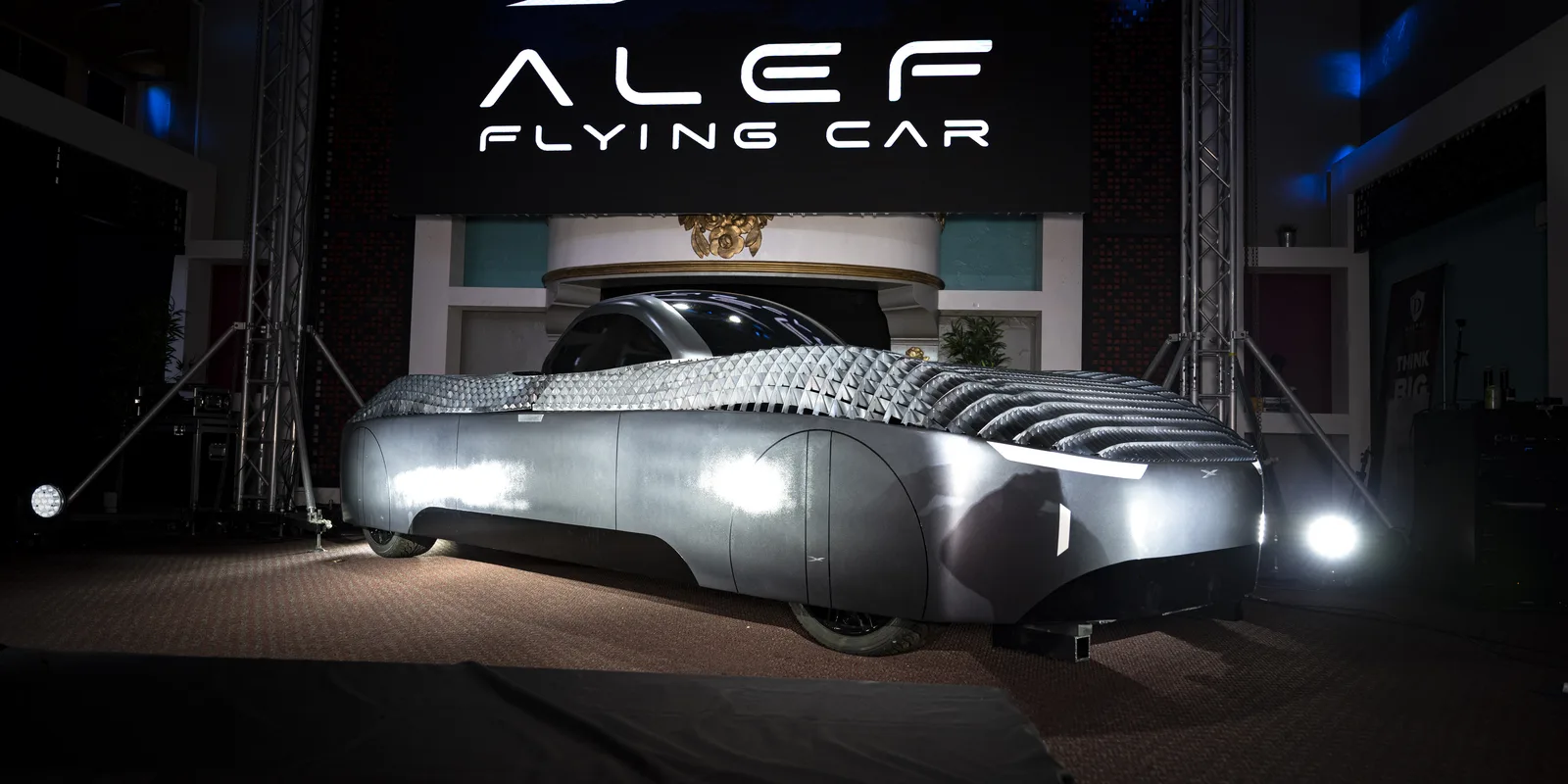
Alef Flew Its Flying Car Over a Tesla Roadster to Welcome Tesla to the Flying Car Race
The same day Tesla showed its thruster Roadster, Alef Aeronautics posted a video of its electric flying car lifting off over a Roadster. It was Alef's 1,000th logged flight.
So basically: Right after Tesla showed off its thruster Roadster, Alef Aeronautics, a California flying car startup, posted a video of its own electric flying car lifting straight up and flying over a Tesla Roadster. Alef says it was the company’s 1,000th logged flight. The message was pretty clear. Welcome to the club, we’ve been here a while.
The jab
Alef’s line was that the “Tesla Roadster today became the second flying car in history, following Alef.” Then CEO Jim Dukhovny added: “Welcome, Tesla, to the flying car race; we’ve been here alone for eleven years.”
He also said competition is a good thing. His reasoning is that a big name like Tesla proves there’s a market, makes flying cars their own category, and gets more investors and regulators paying attention. So it’s a jab, but a friendly one.
This isn’t the first time Alef has done this. Last year it went viral with a video of its car hopping over a Cybertruck. Per Electrek, the Roadster in this new clip is the original one, not the new thruster car.
Same idea, very different way to fly
Alef pointed out what the two cars have in common. Both are electric, both are all wheel drive, and both had the same early investor, Tim Draper.
How they get off the ground is totally different:
- Tesla’s Roadster uses cold gas thrusters fed by compressed air tanks. Tesla says the top Rocket trim has 10 of them and 600 liters of air.
- Alef’s car uses distributed electric propulsion, which means a bunch of electric propellers built into the body. It pulls in the air around it instead of carrying stored gas.
Alef’s design is also just strange to look at. The top of the car is a mesh that lets air through to the propellers. Once it’s flying, the body turns on its side and acts like a wing, and the cabin rotates so the pilot stays upright. Alef also says the car is light enough to carry a ballistic parachute for the entire vehicle.
The paperwork gap
This is where Alef has a real point. Alef says its current model fits the FAA’s ultralight rules, which means it doesn’t need FAA certification to fly. US ultralight rules come with tight limits, like one seat, a low empty weight, and no flying over crowded parts of cities. But it’s a legal path that exists today.
The Roadster’s invite only Rocket trim would have to go through FAA type certification if Tesla wants it legally flying as an aircraft. Alef says that takes years. Tesla’s demo outside Waco was on a private test site.
Alef also got an FAA Special Airworthiness Certificate back in 2023. That’s a limited approval for things like testing and display, not a green light to sell cars that fly anywhere.
Where Alef actually is
The bigger Model A, shown off in 2022, is supposed to drive about 220 miles and fly about 110 miles. Alef says it has more than 3,600 pre-orders worth about $1 billion. The starting price is $299,999. You can get in line with a $150 deposit, or pay $1,500 for the priority list.
The company started hand building its first customer cars in December 2025 in Silicon Valley. The plan is to deliver a small number to early buyers by the end of 2026, but Alef says those are for testing in the real world “under very controlled conditions.” More production is planned for 2027, with training for the first owners.
So nobody is commuting in one of these yet, Alef or Tesla.
My take
I love this. Tesla does a huge night show in Waco, and a small company that’s been at it for 11 years just quietly flies over a Roadster and says hi. That’s good marketing.
But both of these are still mostly videos right now. Alef has the legal head start and a real order list. Tesla has the money and the factories. The one I’ll be watching is whichever actually puts a customer in the air first, and right now Alef’s end of 2026 target is the closer one.
So basically — pass it on.
Daily Updates
Get new stories in your inbox
Near-future tech when it moves. Robots, space, EVs, AI. No spam.